Archive for February, 2012

Denim coaster

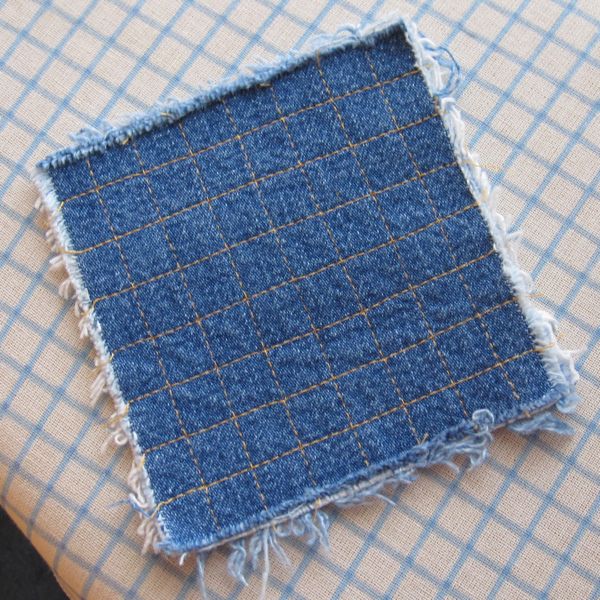
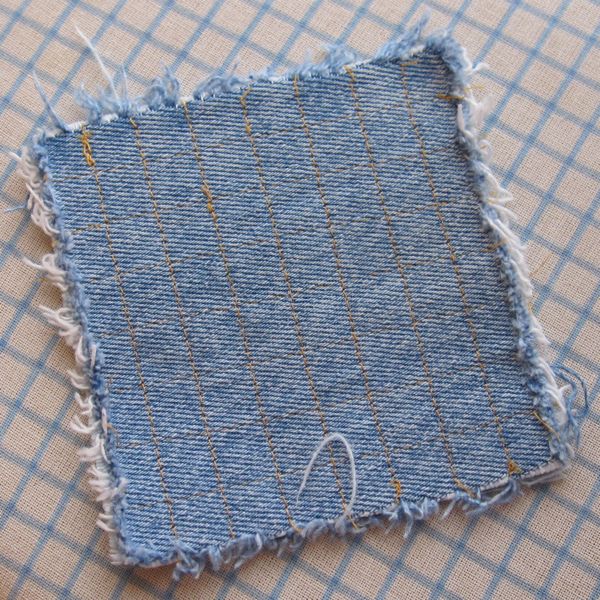
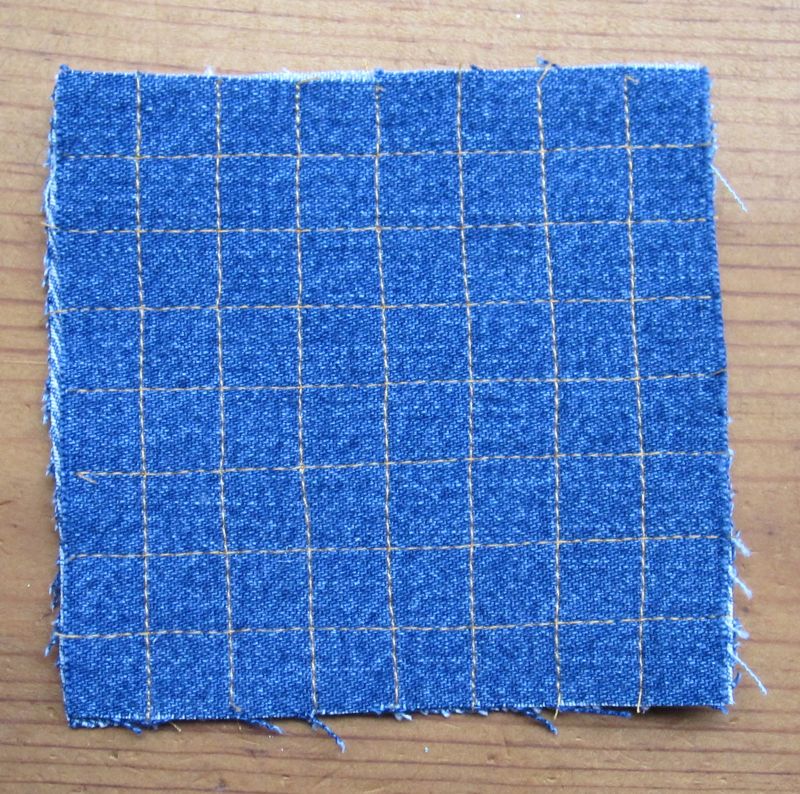
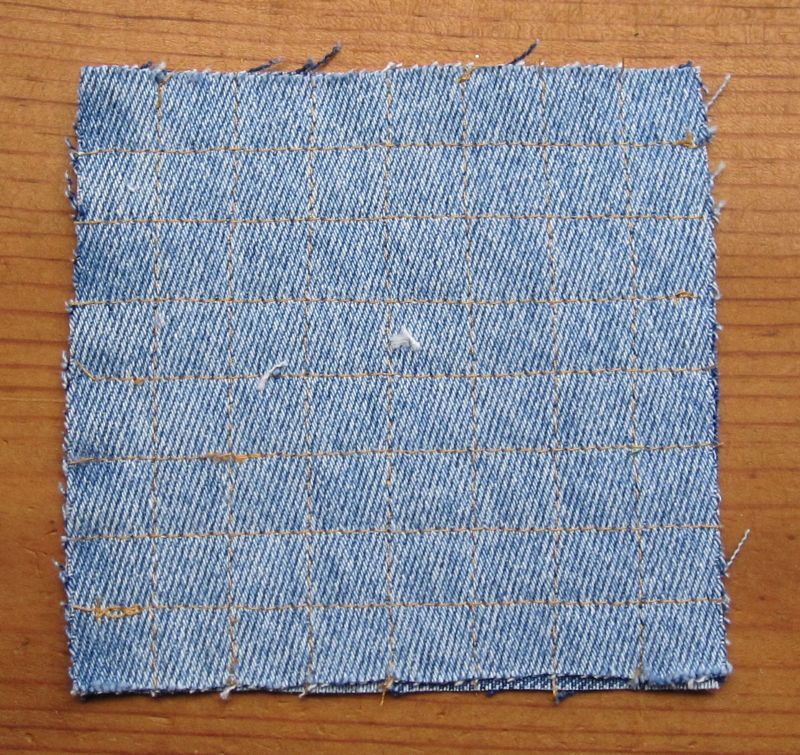
At last! The final Craft Countdown post, and the final post of February. Project #10 was a denim coaster, with light wash on one side and dark on the other. I cut a 4″ square piece of each and stitched across with “jeans gold” thread at half inch intervals.

dark side light side

Now, I didn’t backstitch at all, I just cut the thread at the edge of the fabric. My thought was that it would fray with use and washing, giving a cut-offs look, but the quantity of stitching would ensure it would still hold together. And it did! (thus far.) Of course I pressed it before photographing it, but throwing it in the wash (unprotected by a mesh bag or similar) had exactly the effect I hoped for.

dark side light side


Tiny owl charm

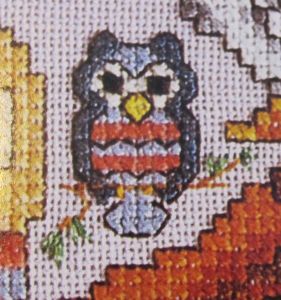
I was sure I would be punished for this, but I took an hour out of my workday (or perhaps a little more) the other day to do some cross-stitch. I haven’t done cross-stitch, except as part of a general embroidery project, in a long time. I wanted something small, but fortunately I have a good library of patterns for small images. I ended up with a design modified from one in 2001 Cross Stitch Designs by Better Homes & Gardens.

book picture

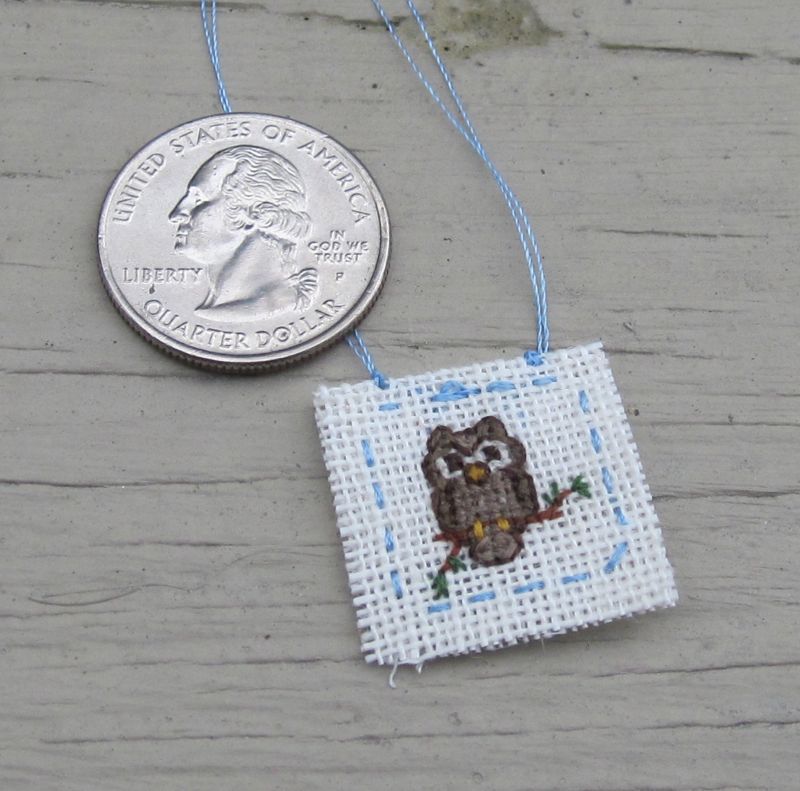
When I say small, I mean small. I discovered as soon as I started to stitch that I had made some tactical oversights – in particular, stitching over one strand on 28-count Monaco does not allow for half stitches. However, I made some alterations and omissions on the fly and came up with what I think is rather a nice finished product.

my owl


Punk fish?

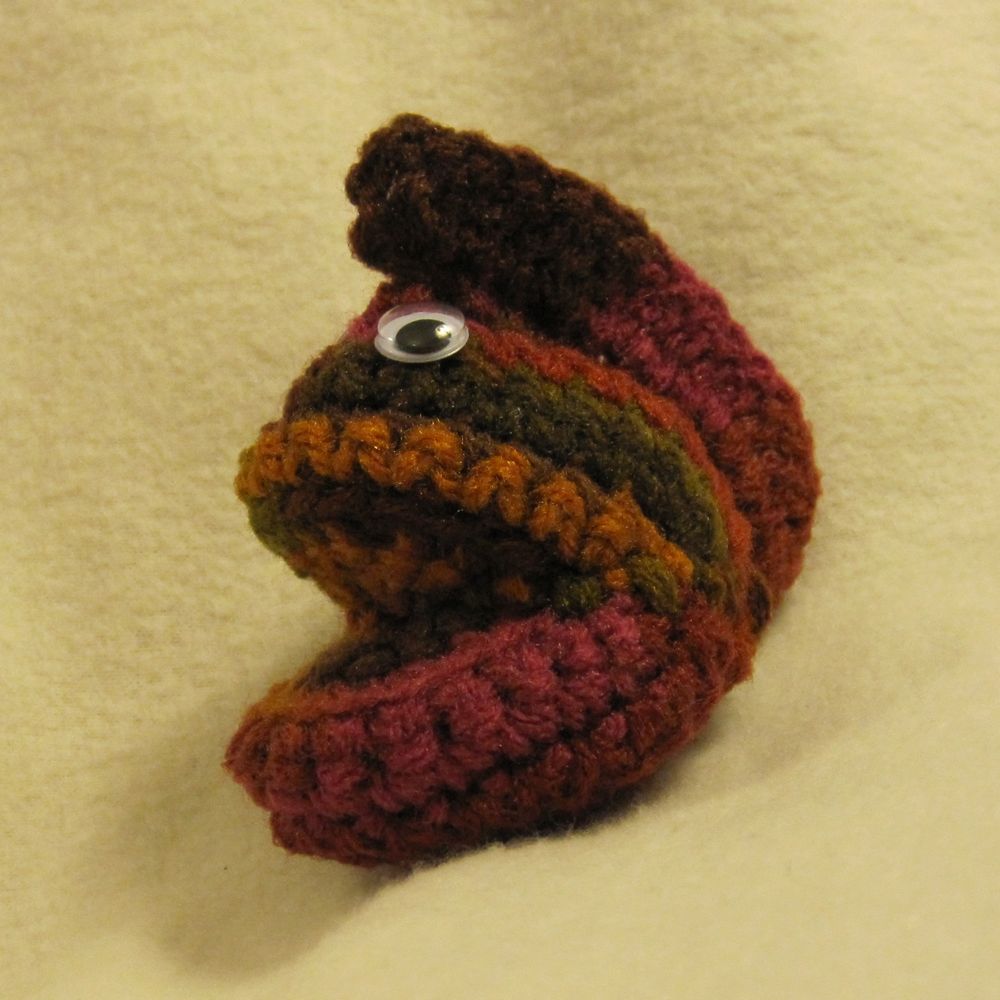
Escaping my work last night with a bit of crochet I decided to try to make a little Fizzgig kind of beast, but as I worked on it the design asked to be a punk with a mohawk. I’m not sure that would be anyone’s first guess on seeing it, but I am experimenting with new construction techniques and it was definitely useful for that endeavor. The pattern is below, anyway; apologies for the terrible pictures. My pattern conventions are here, and all decreases are made on right-side rows so you may use whatever technique you like, including invisible decrease. My guy is in scratchy acrylic worsted weight with an E hook; gauge is not important.
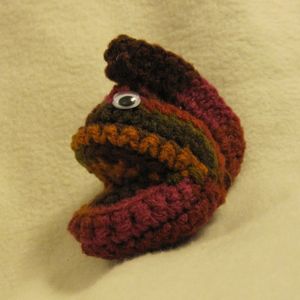
punk fish

Part A. Make 2.
1. Magic ring, ch 1, sc 4.
2. Ch 1, turn; 2sc across (8 sc).
3. Ch 1, turn; *2sc, sc, 2sc*, sc 2, repeat *…* (12 sc).
4. Ch 1, turn; in FL only: 2sc, sc 10, 2sc (14 sc). [rem lps will be on the outside of the piece.]
5. Ch 1, turn; 2sc, sc 12, 2sc (16 sc).
6. Ch 1, turn; 2sc, sc 14, 2sc (18 sc).
7. Ch 1, turn; 2sc, sc 4, dec, sc, dec, sc, dec, sc 4, 2sc (17 sc).
8. Ch 1, turn; 2sc, sc 15, 2sc (19 sc).
9. Ch 1, turn; 2sc, sc, dec, sc 2, dec, sc 3, dec, sc 2, dec, sc, 2sc (17 sc).

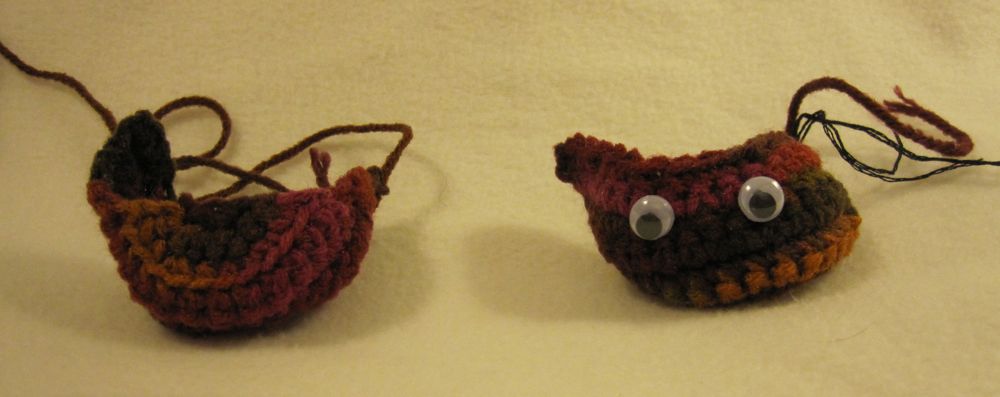
The first one you make, finish off the yarn and attach eyes between rows 7 and 8, centered and about 3 stitches (of row 8 ) apart. Leave the second half attached to the skein.
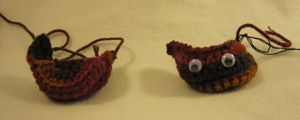
punk halves

B. Turn the second half inside-out and meet the corners. Sc row 9 to itself. I did this in inner loops only but it occurs to me now it should be outer loops only (FL of near row, BL of far row). This is 8 sc. Ch 1 and sc back again, putting an extra sc in the last st or on the side of the initial sc.

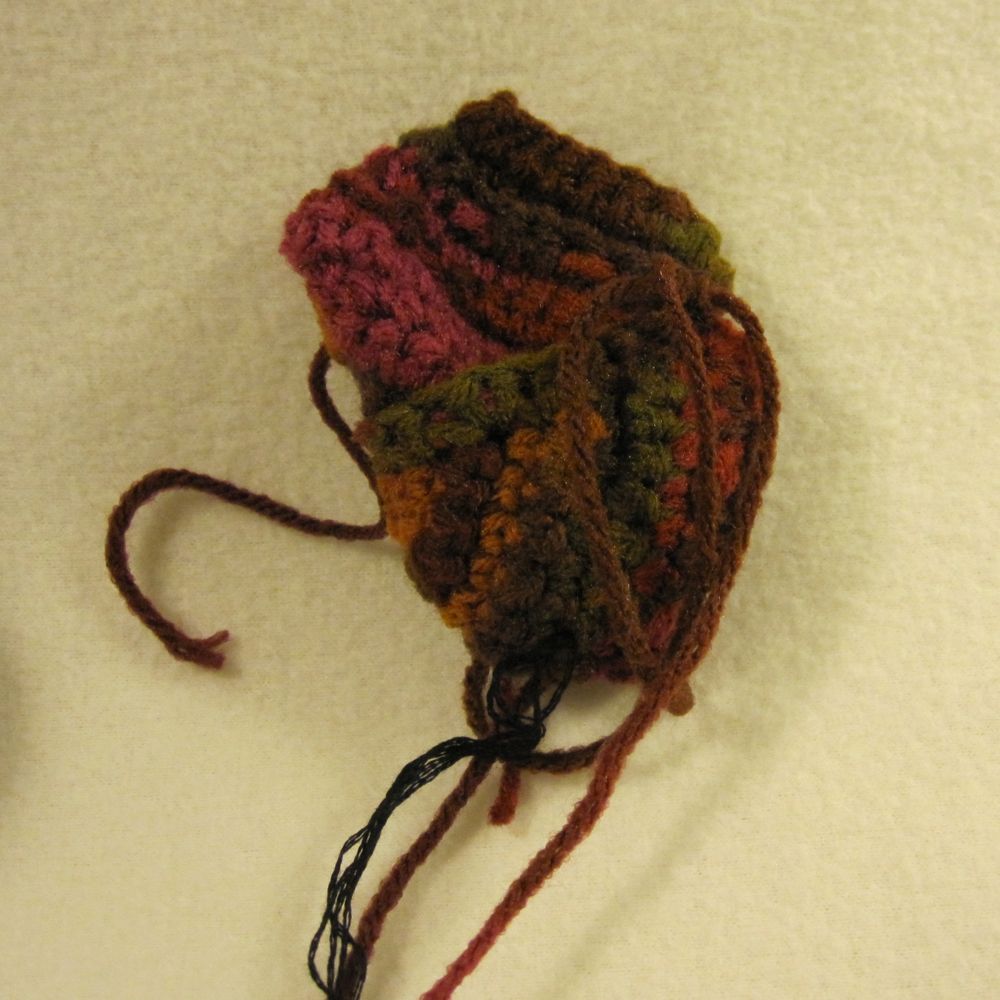
C. Open up the second half a bit and match the first half to it at the corners and magic ring. Sc them together: down the edges of the rows to the magic ring and back up again. In the following picture, step B is along the top right and step C goes around the equator.
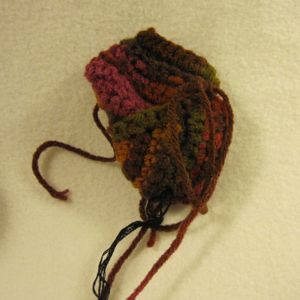
mostly sewn

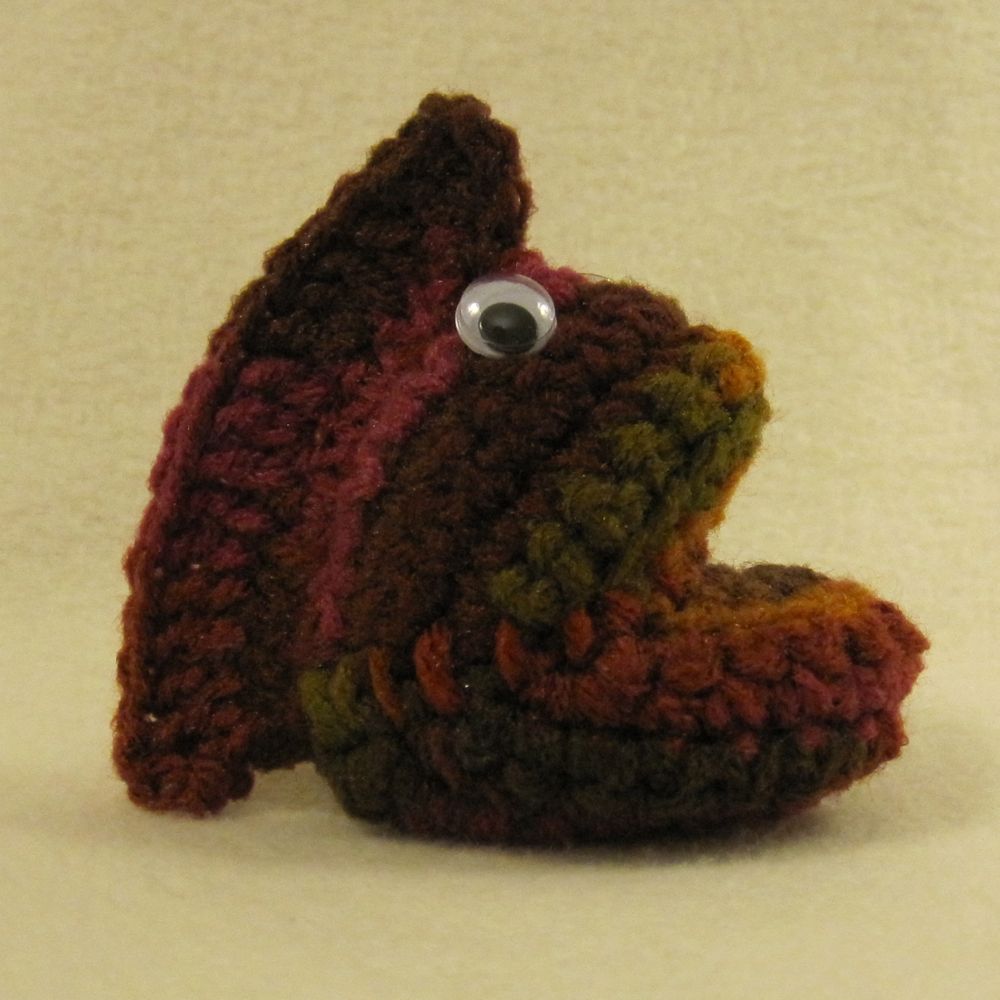
D. If you want the mohawk to be a different color, FO. Otherwise ch 2. Turn right-side-out and stuff. Attach new yarn if applicable and sc closed (st row 9 of the first half to itself). Add additional rows with increases as necessary to get a good mohawk look.
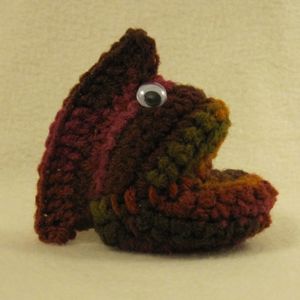
side view

In other news, I’m teaching a Sew-Op class on a parent’s birthday again – my second alterations class is tonight. Happy birthday, Dad!
 

Homemade iron-on patches

Craft Countdown #9 was robot iron-ons. It was getting close to 11:30 and I was worried about running out of ideas, so I started rooting through my fabric drawers. The top one holds flannel-ish material and denim, and I pulled out a small remnant of robot fabric. I loved this fabric, but there is so little of it, the options for using it are limited. I had thought about making iron-on patches out of it, but hadn’t gotten around to it.

What I had on hand for fusible web in sheet form was Wonder Under, so that is what I used.

materials

I cut pieces, lined them up with the pictures, and ironed them down. Of course, it being 11:30, I did two dumb things: I started ironing one on upside-down, necessitating a later cleaning of the iron, and I peeled the paper off before cutting them instead of leaving it as a protective backing. They’re still cute.

robots!

Now I just have to figure out what to do with them. I have made these before, out of other fabrics that had nice little pictures, but they languish in a drawer for the most part.

too many iron-ons

Of course, making the business card case and the memo pad holder gave me a use for some of my commercial iron-ons, so maybe these will see use in such projects as well.


Heart charm tutorial

Are you looking to give something sweet and personal and handmade to your sweetie, but lack hours to spend on it? A little fabric heart charm tucks into any card and is quick to make.

You need fabric and felt in coordinating colors, fusible web such as Stitch Witchery, coordinating thread for your sewing machine, and, if desired, embroidery floss or other added decorations. You’ll be making two fusible-web-backed hearts of fabric and sandwiching some felt between them.

If you want to embellish the individual sides with embroidery, do that first. You could do hearts, of course, or flowers, a smiley face, initials, a pet name, words like “love” or “be mine”, silhouettes, or even an arrow going through the heart (which might take some planning to line up right).

Second, draw or trace two matching hearts on the paper of the fusible web (I have a pdf of sample heart shapes for you). Make sure they are mirror images to each other! Cut them out and steam iron to the wrong side of your fabric, centering your embroidery underneath, if any.

tracings and fabric

Cut out the fabric and peel off the paper. Iron one heart onto coordinating felt, cut out the felt, and then iron the other fabric heart onto the back. You may cut the felt flush with the fabric edge, or leave a little margin. I did one of mine on two colors of felt, the line between the colors joining the center top and bottom point of the heart. That would perhaps have been more effective had I left a margin of felt around the fabric; it is a very subtle effect. The other heart I cut out with pinking shears, which did not do so well on the felt but did well enough.

on two colors of felt ironed but unstitched

Finally, machine stitch around near the edge, or whip stitch by hand. This is an optional step, since the fusible web should keep everything together, but makes for a sturdier finished product. It also frames any embellishment you added and provides more visual interest if you did not add any embellishment. If your embellishment goes clear to the edge of the heart (for example you lined up an arrow so it would go right to the edges) you could skip this or make two partial lines of stitching, stopping short of your embellishment on either side.

finished finished, other side

On the violets heart, I couldn’t decide which of my two coordinating green threads I liked better, so I put one in the bobbin and one on top. I stitched around twice with my presser foot lined up with the edge of the felt, and then flipped the heart over and stitched around twice again with the presser foot lined up with the first line of stitching. On the red heart I used one of my special zigzag stitches to try to echo the design of the fabric. I also have a special zigzag that looks rather like an EKG and would be a great choice for this project. On both hearts I steam ironed once more after stitching, in an effort to have the fusible web also fuse to the thread and hold it in place.


Spray of flowers

We have come to Craft Countdown #7, the only one for which I bought new materials. My half bath has an absurd amount of shelf space that I really do not have any need for. It is also painted a shade of periwinkle that I believe was engineered in the laboratory to coordinate with as few other colors as possible. I decided to go with green and yellow as accent colors, which work okay, and a mild frog theme. There are four cubbies on each side of the mirror, and one was empty; it had held a large bar of soap that is now in use. I wanted something a little livelier than the other cubbies’ contents.

left side right side

I dropped by the dollar store while running errands in the afternoon, and found some nice looking yellow roses that I picked up. When I got home and cut them apart, I discovered I could move the leaves, so I pushed them all up right below the blossoms. I bent the stems around so the flowers would stand at varying heights, and wired them together.

materials from top

Then I found some (accidentally perfectly) coordinating ribbon from my stash and wound a length around the bottom to hide the tangle of stems. Initially I had it pinned together, but the ribbon was actually iron-on, so later I went back and pressed it so it would stick to itself and stay wound.

base middle

It serves its intended purpose!

in place


Tile coasters

I recently went to a paint-your-own pottery shop with a friend who wanted to make a few gifts. I didn’t really have anything in mind, so I took a 6″ square tile, pulled some colors that appealed to me, and started painting. I completely forgot to take a picture of the unfired piece, but my friend very thoughtfully went back a day or two later and got one with his phone. You can see it is completely matte, with true yellow and a brownish light colonial red with the two brown shades. The design idea was “keep painting until you like the result.”

unglazed tile

When I got the fired tile back, they had put a clear glaze over it and the colors had become richer, though not to the degree of the samples. I suspect I did not use as thick a layer.

glazed tile

The motivation behind picking a tile was a tile coaster I already had. I picked up the tile at a secondhand shop, and glued two layers of felt to the (unglazed) back of it. It serves as a coaster, the grooves acting as an acceptable substitute for being absorbant, as well as a trivet, for when I sit in my recliner eating oatmeal or something and want a place to set the hot bowl.

lovely front felt layers

I thought it would not be a bad thing to have a second such coaster/trivet, but was not sure whether the fact that the back was glazed as well as the front would make it impossible to glue felt onto it. Fortunately, I had some furniture coaster type felt strips lying around, so I stuck two of those on the back.

glazed with felt

It’s not my favorite thing I’ve ever made, but I like the “drop of water under a microscope” look of it. Currently it’s living in my sewing room, the other place I often want to set hot things and beverages but otherwise don’t have a good place for them.


First Friday

Happy Friday!
My brain powered on before 3 this morning and let me sleep only maybe 45 minutes between then and coming to work, but I am still hoping to go see a friend’s art reception tonight and then (after a disco nap) hear some live music.

I am feeling in a Valentine mood. I recently discovered a poem I quite like called Valentine, by John Fuller. It really says it all. Of course, I think W.S. Merwin says it all as well, in only five lines, but he doesn’t enumerate the particulars.

Feeling Stitchy has a Valentine-ish stitchalong for February that involves bending the phrase “all you need is love,” with a heart at the end, out of wire, stitching it onto fabric, then filling the heart and dotting the i with stitching. You could do it with yarn instead of wire, or pipe cleaners, and with a lot of different phrases even if you wanted to keep the love/heart theme. I thought of these:
love conquers all
keep a song in your heart
live, laugh, love
how do I love thee?
love thy neighbor
faith, hope, love
love makes a house a home
love makes the world go round
you have the key to my heart
love is love’s reward
keep peace in your heart
trust your heart

You could replace various words with images – heart, obviously, but also key, and world, and even house.

I will have a little tutorial for a stitched heart charm no later than Valentine’s Day. I also have ideas for crocheting with something unusual and Valentine-ish, if I can track down the materials in time. Otherwise… we have three Craft Countdown posts left, and I’m teaching another alterations class in a few weeks, so there will be a post for that.


Sculpture class final report

Guess what I forgot to do yesterday?
Well, better late than never. To call this the final report is slightly misleading since the piece has yet to dry and will hopefully subsequently be glazed and fired, but the class is over.

Recall that in the first class we made a lot of little pieces – or at least I made a lot of little pieces. At least one of my classmates came in knowing exactly what she wanted to do, and so she made a small model, a maquette, just to figure out the particulars. I came into the second class still not sure what I wanted to do for my larger piece, but with roosters on the brain. I spent the beginning of that class making a new maquette.

bird

The instructor helped me build an armature of PVC pipe in a T shape, which was excellent for support but did make the crouching position basically impossible – the body really had to be completely horizontal. Oh well, working within constraints is often more interesting than working without them. The first night’s work produced this:

night 1

The next week when I arrived I was not very pleased with my work in progress. Lengthening the beak made an enormous difference in my opinion, all by itself. After I did a little work on it, the instructor helped me take the armature out, but we found the clay inside was too sloppy still for hollowing the bird and expecting it not to collapse. Removing the armature required cutting the bird in half chin to tail and then stitching it back together again. Since the clay was still fairly soft, we had to support the bird’s head. Here’s the end of two nights’ work:

day 2 view a day 2 view b

The fourth and final night of class, my third night of work on the bird, he had to be sliced in half again to make room to scoop out a lot of the interior clay. The thicker the clay, the longer it takes to dry and the more likely it is to dry unevenly. Again we violently slashed back and forth across the cut line to make sure the clay was thoroughly stitched together so it wouldn’t crack in the kiln later. I then did the final detailing, filled in low spots, and smoothed over rough patches with the newly available clay. I’ll go back with a piece of sandpaper and some other things probably a week from tomorrow and see if it’s dry enough yet to really smooth the surface.

final view a final view b final view c

Dry time is probably a good six weeks, but hopefully I will have a third post about glazing and firing this beastie!