Archive for December, 2011

Bottle cozy

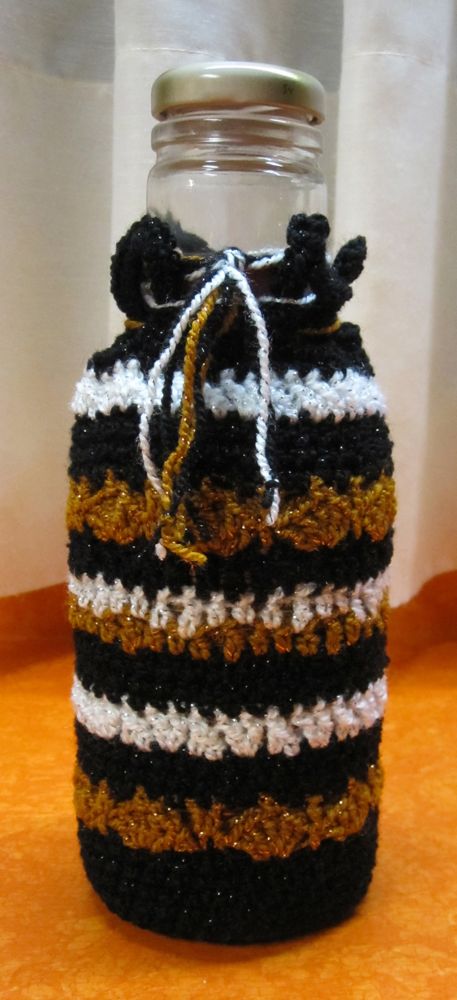
My grandmother has been instructed to drink a lot of water, so she asked for a water bottle for Christmas. Specifically a metal water bottle. She likes her water very cold, so I thought I could take yarn with me and make her a sleeve for the bottle, which turned out to be an Arizona Tea bottle after all. She’d suggested black; I also bought white and had some sparkly burnt orange on hand. I made the bottom from cotton yarn so it could act like a coaster, and the sides were Vanna’s Glamour. She looks like a real Hawkeyes fan.

bottle cozy

I just freehanded it; there are some shell stitches, some alternating dc inc and dc dec, some straight dcs and some multi-row scs. It was all with an E hook.

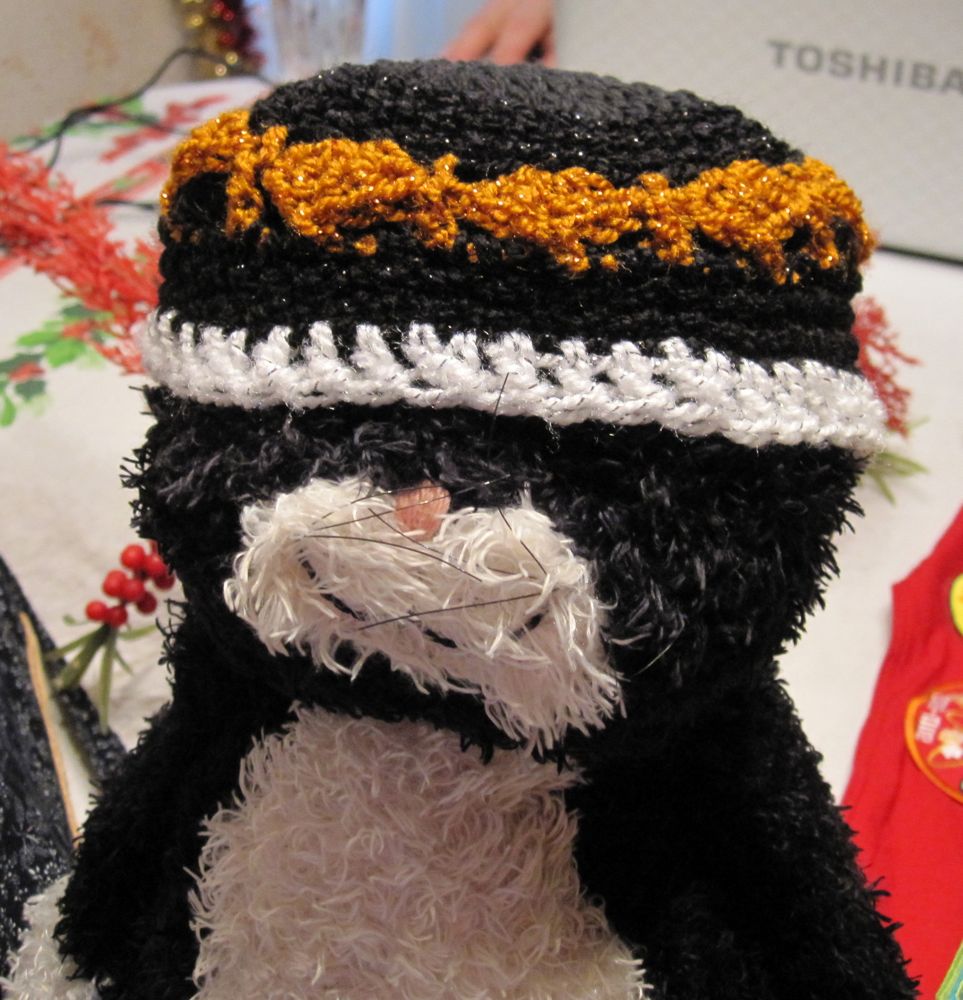
On my first attempt, I decided for some reason that smaller yarn meant I should use a larger hook for the sides so it would fit. That was erroneous. I decreased by lots of stitches as I went but it was still way too big. However, it made a great hat for my niece’s new stuffed cat!

rasta cat


Potholders

My mother made a request for crochet potholders for Christmas, as I have mentioned. I made her four, two single layered and two double layered. I pulled four patterns from Crochet Pattern Central, but only made two of them after all.

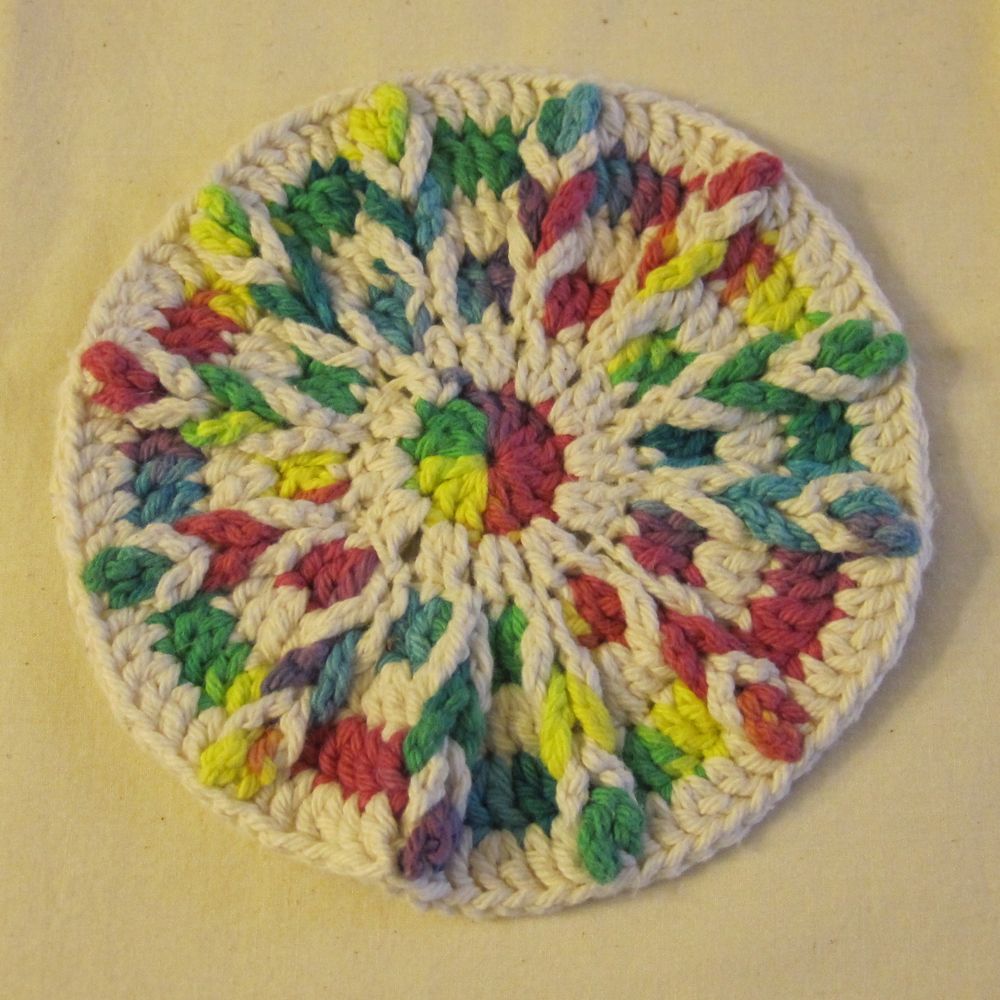
The first potholder I made was a kaleidoscope hot pad. This pattern was very mysterious, because until you get to the last round there are just a billion big loops sticking out everywhere. Then, you weave them through each other, and it all makes sense. One modification I made was to go back afterward and stitch around between rounds 2 and 3, because until the weaving gets going, the potholder is very full of holes.
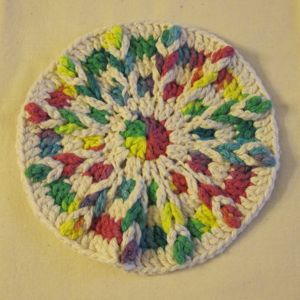
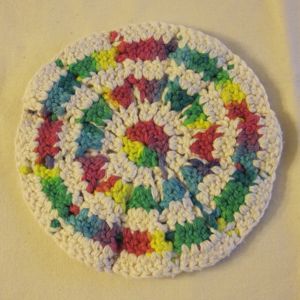
kaleidoscope hot pad kaleidoscope hot pad

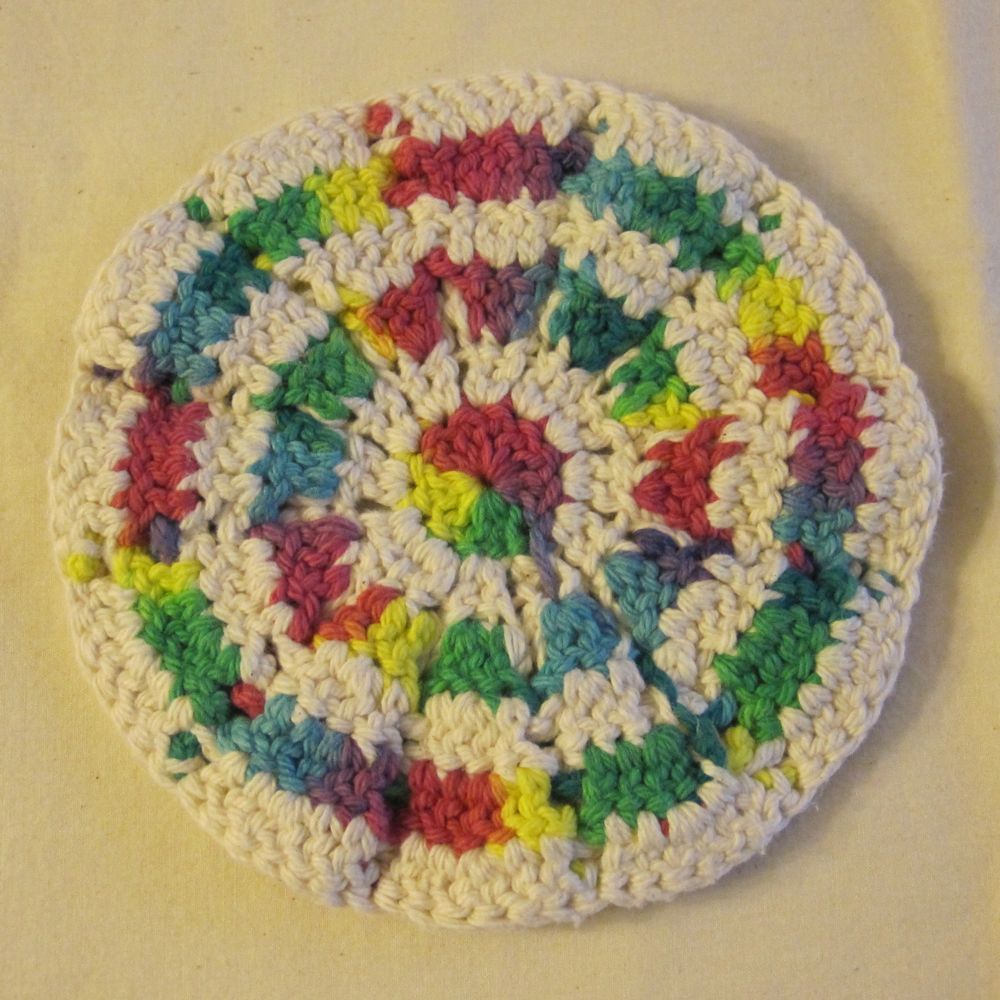
The second was the double-sided ric rac potholder. If you make it yourself, note that mine didn’t look quite like rickrack until I washed it.
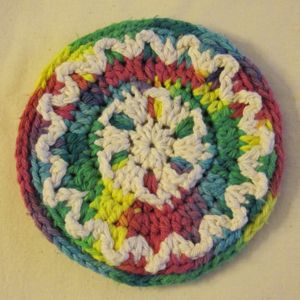
ric rac potholder

Next I made the ill-fated peacock attempt, which was inspired by the sea shell potholder pattern. While I was pondering where to go with that, I decided not to make the jewel heptagonal potholder, partially because it seemed like it might be awfully thick in the center, and partially because I couldn’t settle on colors.

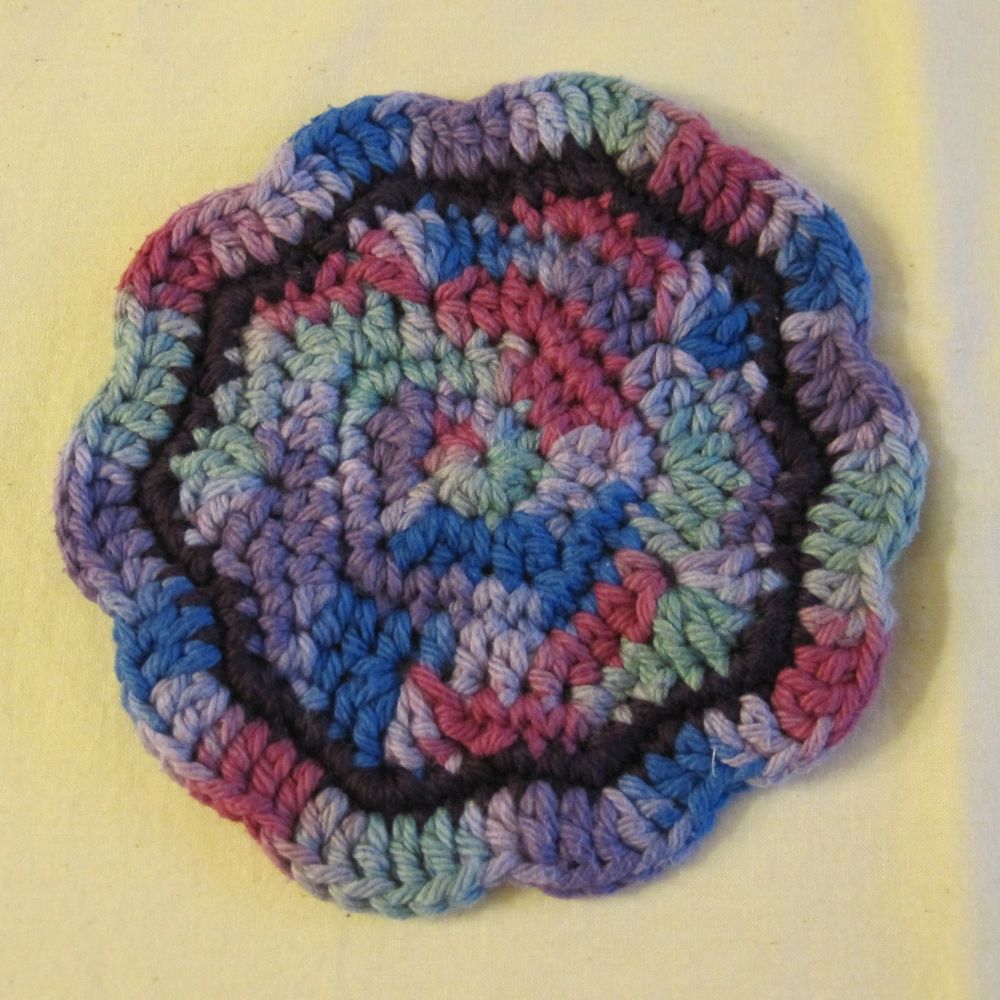
Instead, I freehanded a potholder that started out pentagonal and ended up as a ten-petaled flower.
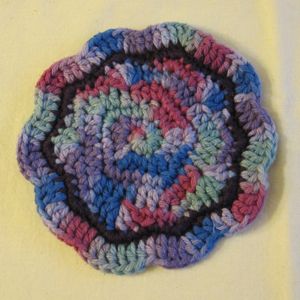
pentagon flower

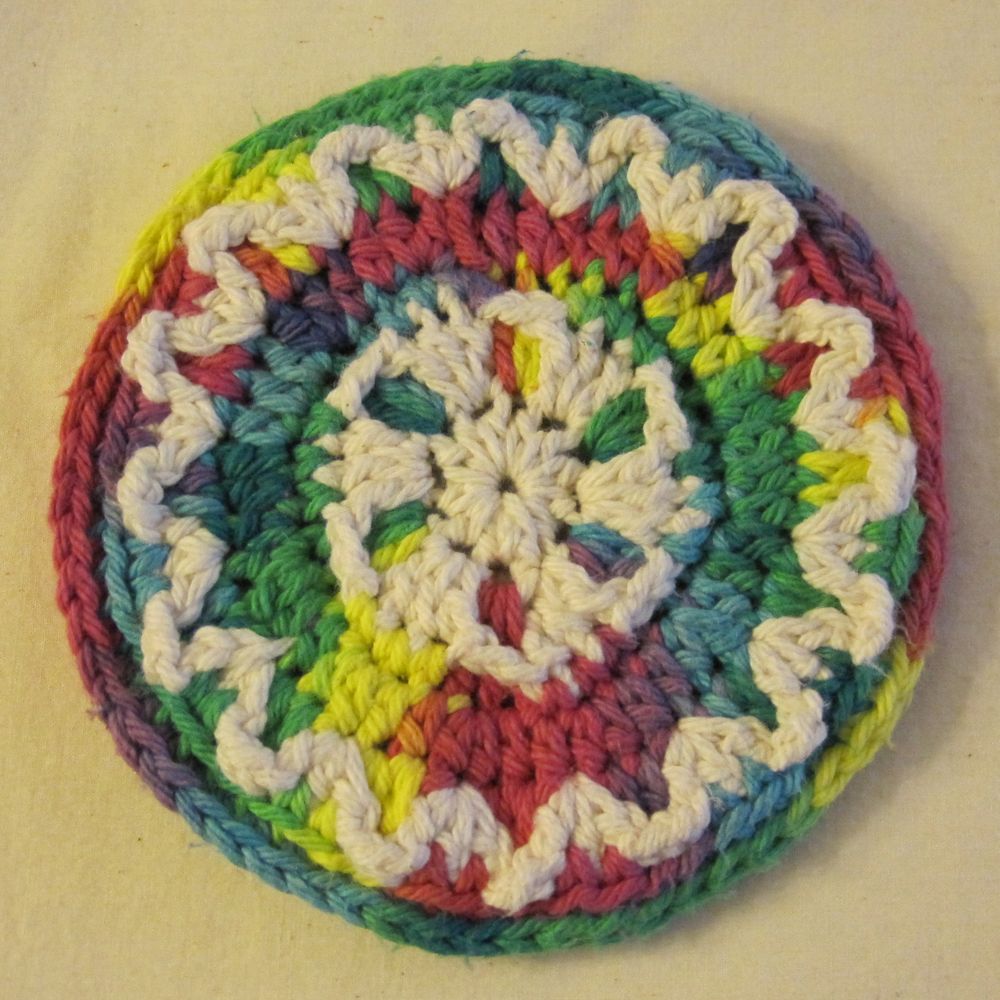
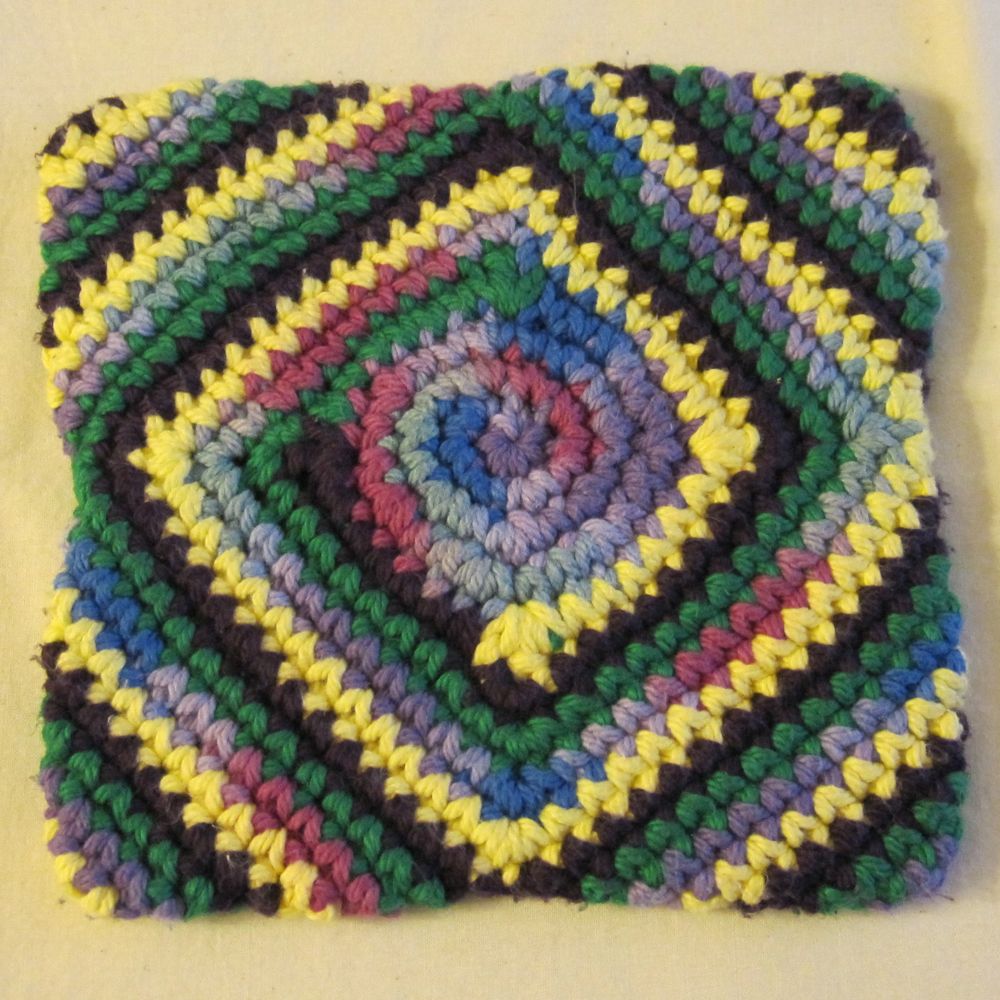
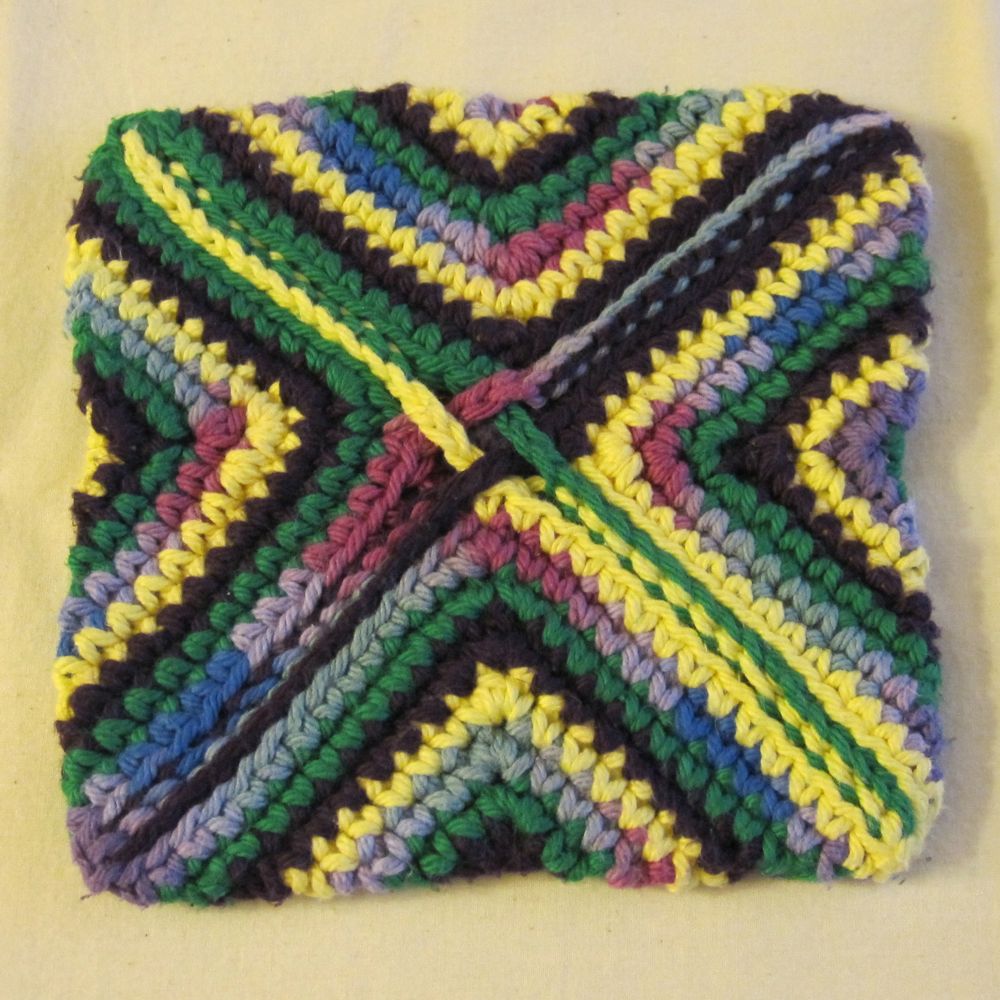
After that I decided to table the peacock idea and freehanded a second potholder. This one started out as a disk, 7 sc in the first round and an additional 7 sc per round until I got to 28, and then became a square by concentrating the increases in the corners. I intended to add each new color with a ch 2, hdc, sc in the first stitch, but halfway through I realized I was actually doing ch 2, dc, sc in the same stitch. Oh well. The next color put an sc in the ch and then 2sc in the dc, and after that I just spiraled around, going as far as I could with each color when it was innermost before going to the next, and putting 3sc in each corner. I made a very large square, finished each color at the corner where it had started, and folded the corners to the center back. I added one more sc, catching a loop from the other side of the potholder, ch 3, and sl st down the opposite line from where each color ended. To get the chains in the center to each be over one other and under one other, I worked around in a circle and with the last one I passed the ch 3 under the appropriate other ch and pulled through the yarn needed to complete the sl st line.
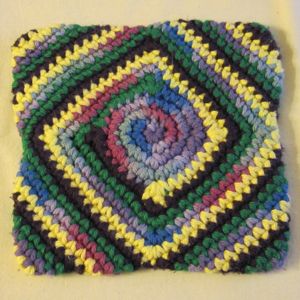
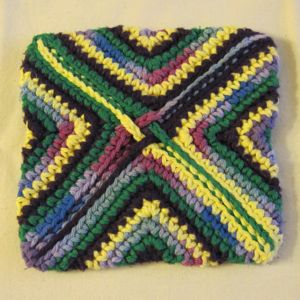
spiral potholder spiral potholder

Potholders are a good project – you can do them in one or two sittings, and they’re a nice manageable way to try out interesting stitches and patterns. Highly recommended.
 

Tidbits, Supplemental

I have for you another installment of material related to the Sewing Tidbits page. Mostly a few pictures.

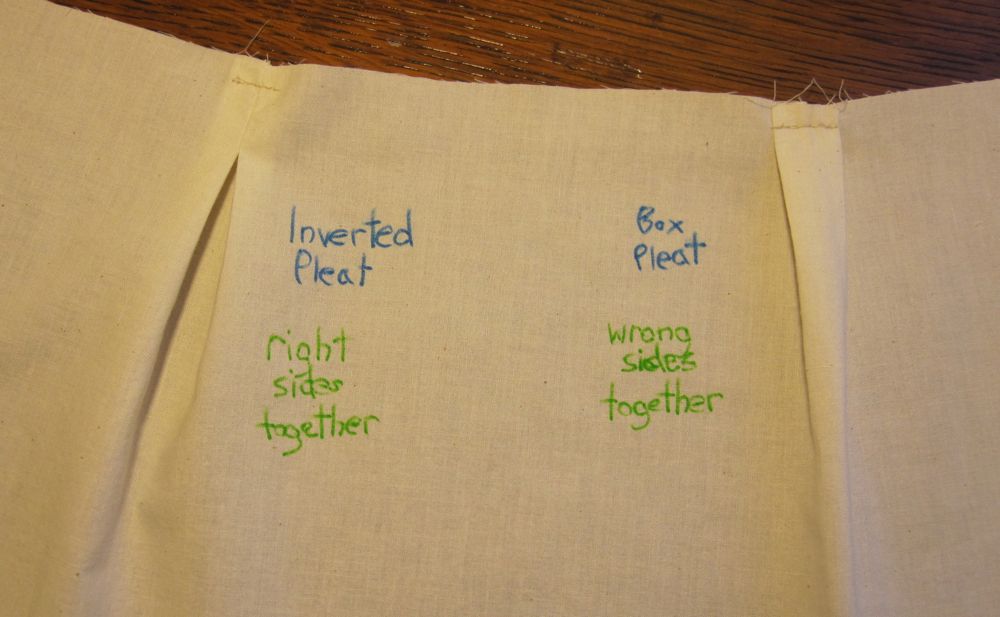
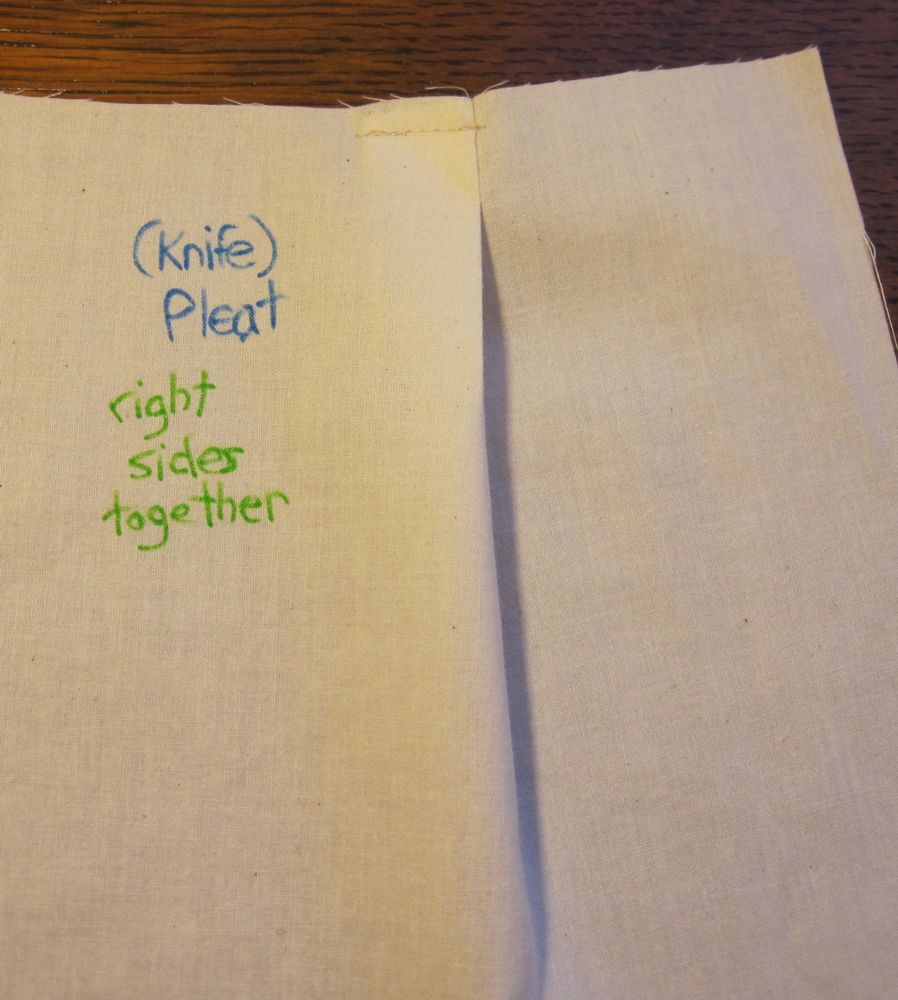
I love box pleats. And inverted pleats, which are box pleats on the back. I think it is because I like symmetry. Below we also have a picture of a standard, or knife, pleat, for comparison.

box pleats knife pleat

Box pleats appear in the center back of dress shirts and where the lining of a coat meets the coat in the top center back. I use inverted pleats in many places where I need to take width out, because I think the way the fabric spreads is pretty. For example, if I were making a bag that was to be fuller on the inside than at the top opening, I would probably use a box pleat on the side to bring it down to the top dimension.

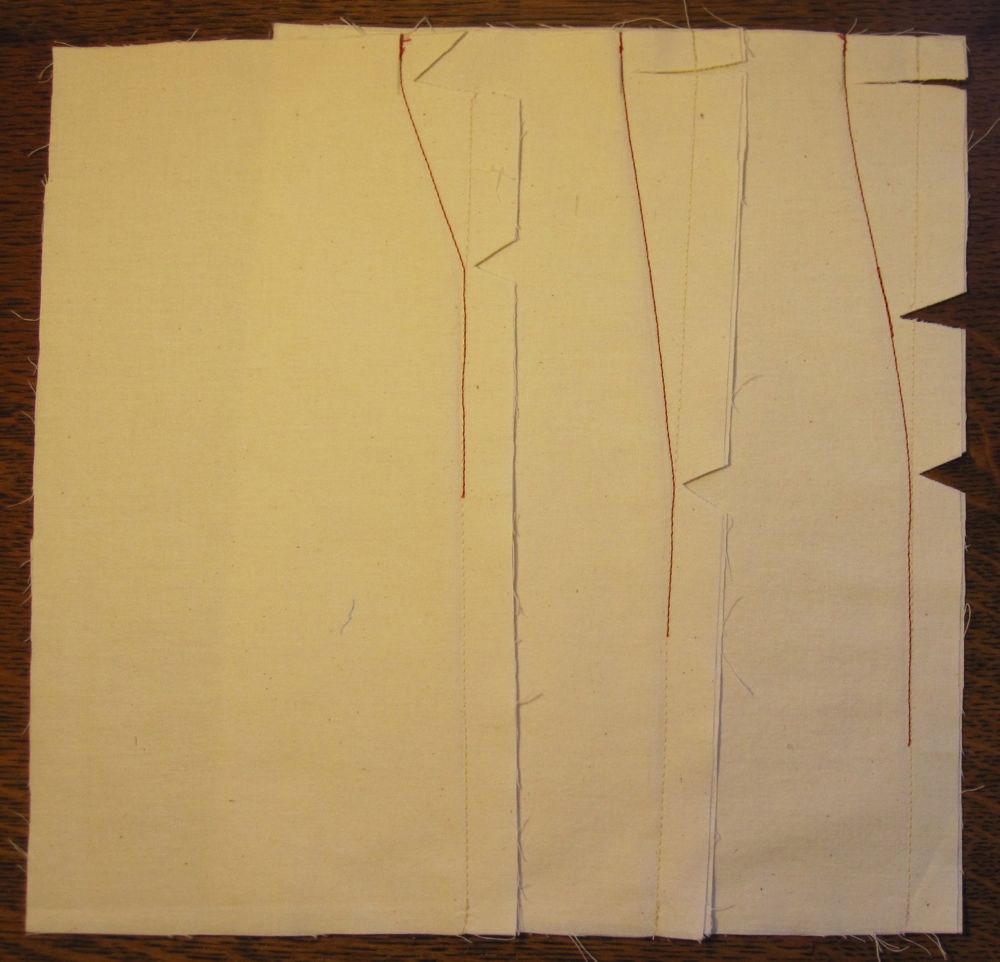
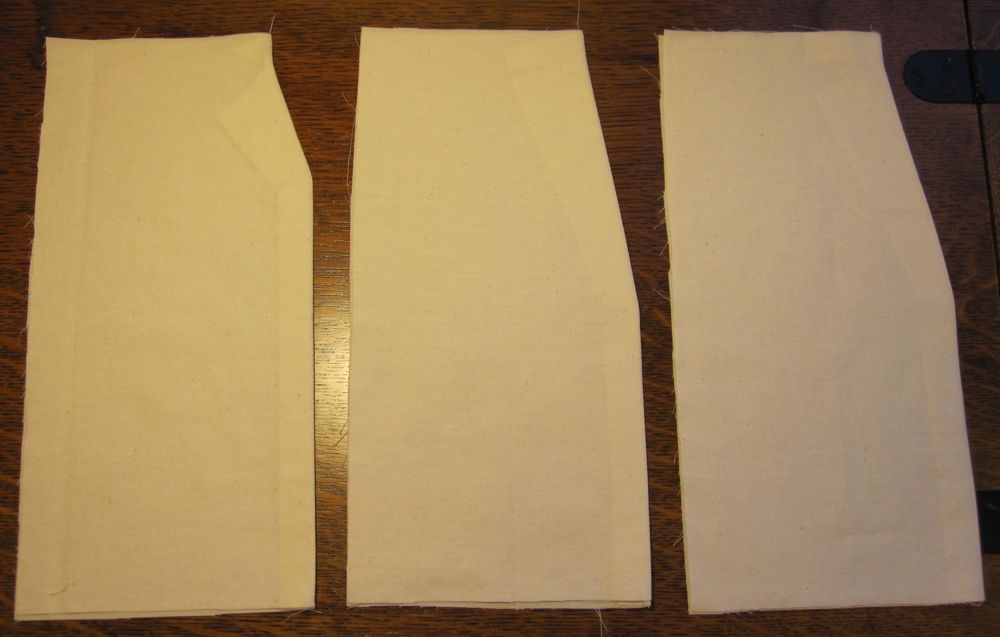
The following is my attempt to show the results of different approaches to meeting a new seam and an old one, for example when you take in pants at the waist. You can see that a very obtuse corner is not much different from an actual curve, because the fabric is inclined against having sharp folds, but a sharper angle (though still obtuse!) gives a decided corner to the fabric. The pictures below also illustrate clipping curves in seams. [I would also trim the allowance in real life so it was all in the 5/8" range.] If the seam line is closest to the raw edge at the middle of the curve, clip a notch out; if the ends of the curve are toward the raw edge you can notch or just snip. In the former case when you turn the piece right-side-out the seam allowance has less room and in the latter case it has more room.

seam tapering seam tapering results

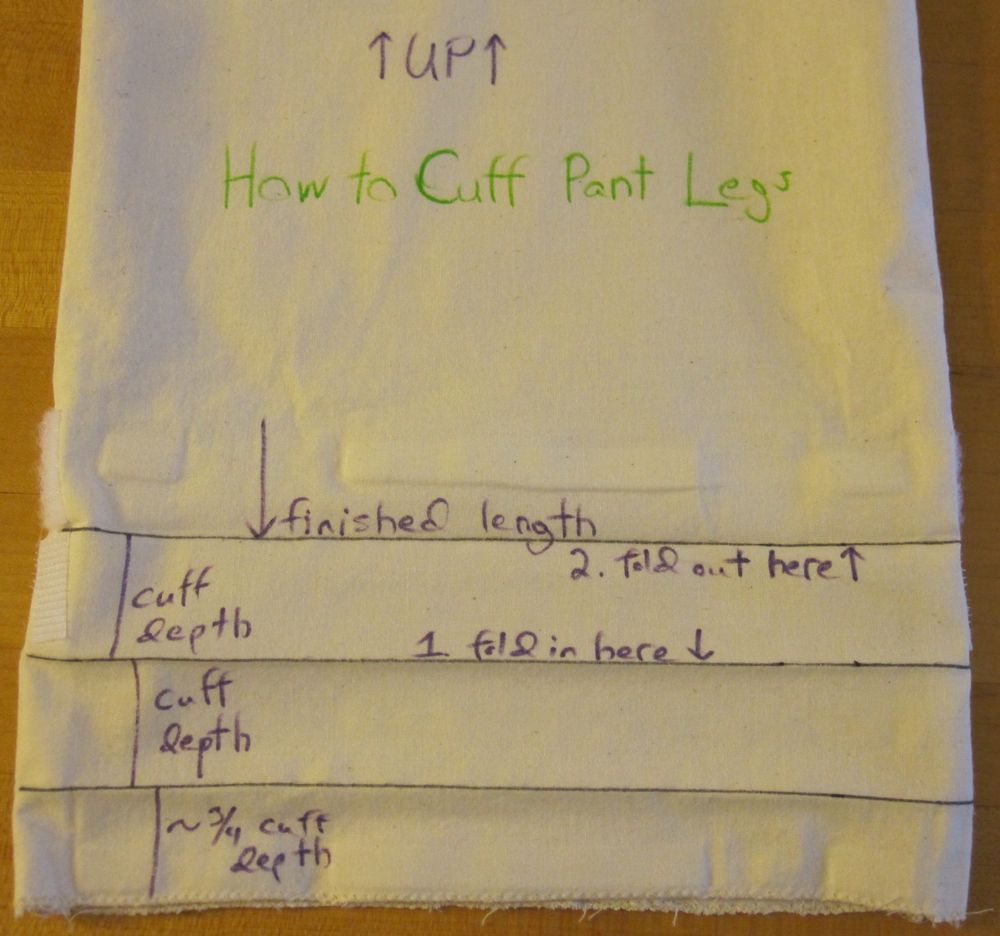
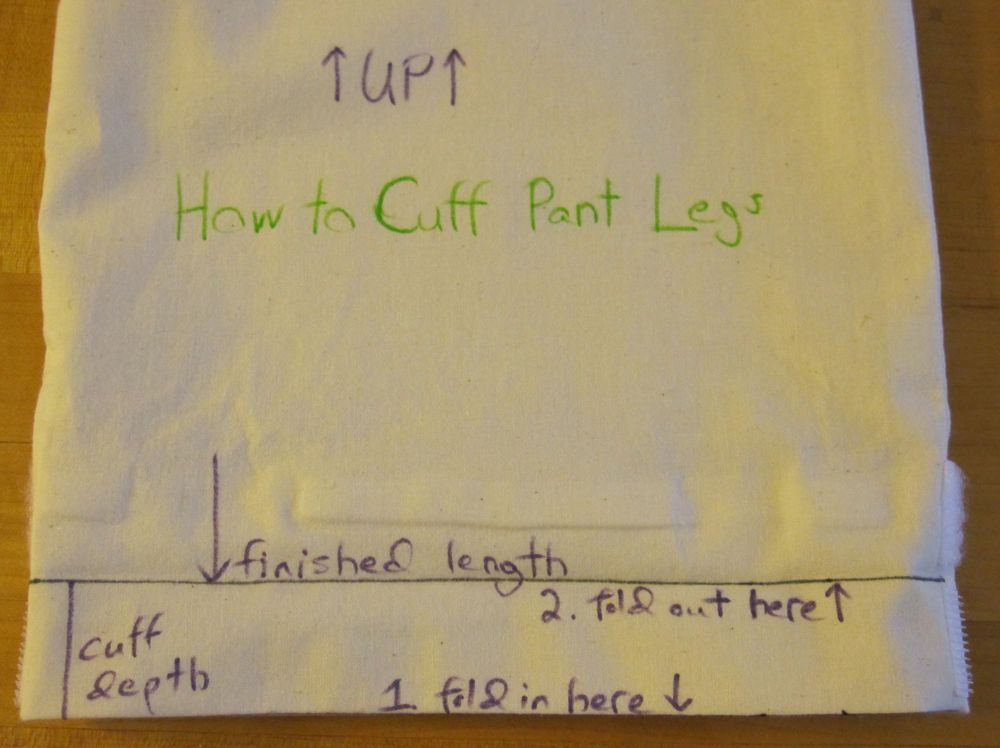
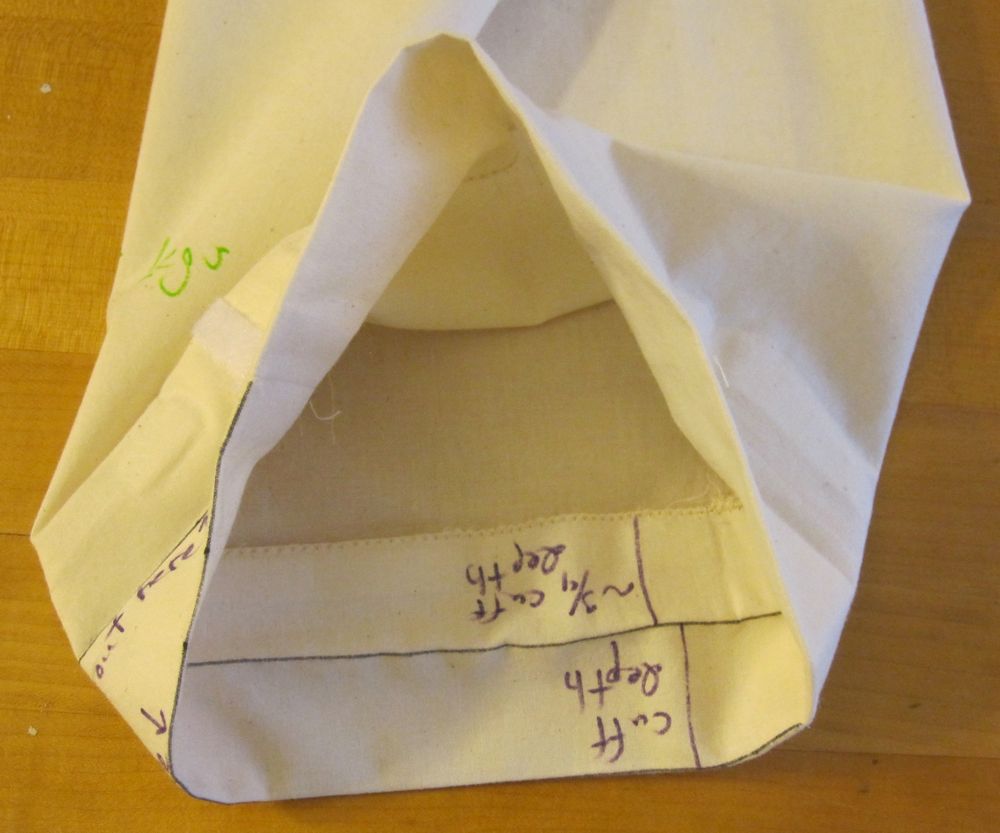
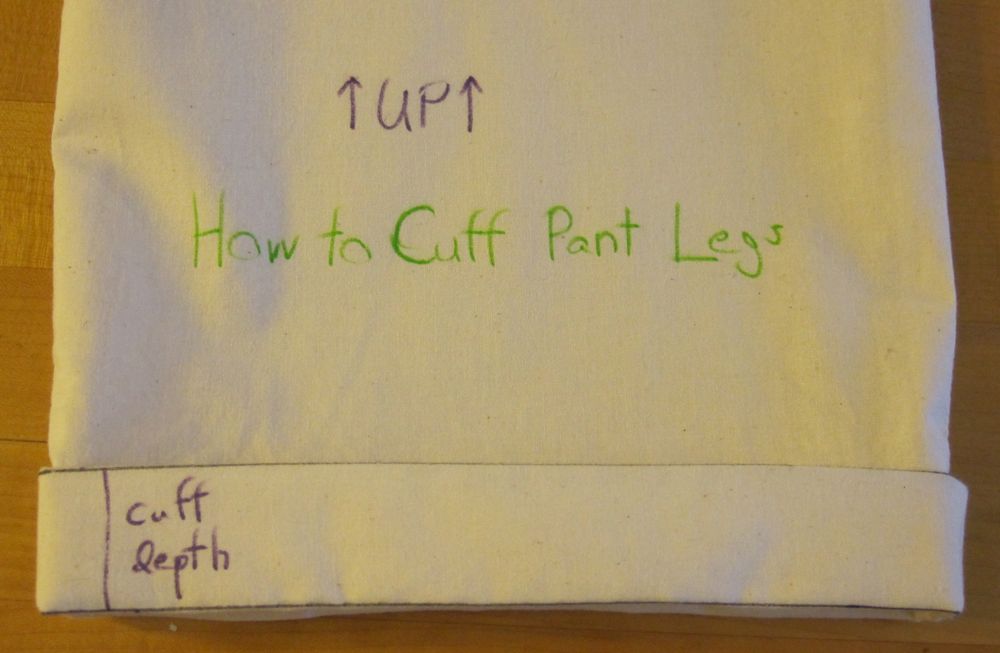
Finally, I have action shots of the pants cuff manipulative from class.

cuff making cuff making

cuff making cuff making

Just a few things of use…


Half-hour reversible drawstring bag

Last Tuesday afternoon I had a haircut. As often happens, I completely forgot that it was the holiday season and I would like to give my stylist a gift until a couple of hours before. Or, really, about an hour and fifteen minutes before. I thought I would cut a piece of nice fabric, get cookies, and wrap them in the fabric.

In about twenty minutes I made a reversible drawstring gift bag, and then I stopped by the nice grocery store en route for some gluten free cookies. That is why these pictures are all in my car.

crane bag crane bag

crane bag crane bag
It wasn’t until I was writing this post that it occurred to me the other fabric is also cranes.

Later I made some more bags of the same sort, so I could share the method with you.

You’ll cut two identical pieces of fabric. Make them twice as wide as you want the finished bag, plus an inch, and the height from bottom to drawstring plus a generous two inches. The pieces below are 20″ wide and 12″ tall, and the bag they made ended up 9.5″ wide and not quite 11″ tall, not quite 10″ to the bottom line of stitching for the drawstring casing.

spring-ish bag spring-ish bag

The pins in the second picture indicate the opening you will leave for the drawstring to go through, on both pieces. My markings are at 3/4″ and 1 1/4″ down from the top of the bag; when I made some bags for children I pushed the second line down an eighth of an inch. Sew the side seam with a half inch allowance, skipping the part between the pins and backstitching on each end of it, and press the seam open.

Fold the top of the bag down a half inch, press, and turn the raw edge under. Press again. I found my sleeve board very helpful for this step.

spring-ish bag spring-ish bag

To keep the seam allowance from poking out the opening when you move the drawstring around, sew it down a bit away from the seam line. I just lined my presser foot edge up with the seam line. If you are putting the drawstring opening on a face of the bag, as in the crane bag, you need only go a bit past the drawstring opening. If you are putting it on a side, as in the three matching bags below, I recommend stitching all the way to the bottom.

For a bag with the opening on a face, flatten the two pieces so the seam line is centered and lay them on top of each other, seam allowances together. Otherwise just line them up with the seam allowances on the same side. Stitch across the bottom at a half inch, and again between that line and the raw edge.

spring-ish bag

Note that if your two fabrics have different amounts of give or you were less than precise when cutting, you may have slightly different lengths. It is more important that the tops be lined up than the bottoms.

Wrap one piece around the outside of the other and line up the tops, making sure the two drawstring openings match up. Pin and sew around, once close to the edge and once below the drawstring opening. I did the first by lining my presser foot up with the edge of the fabric and putting my needle to the right, and the second by running the edge of the fabric at my 6/8″ mark (the largest my machine has) and putting my needle to the left. Run the drawstring through and you’re done!

spring-ish bag spring-ish bag

I made three matching bags for the three daughters of a friend, and used beads for their initials. There is a baby in the house, so I put Fray Check on the knots below the beads to keep them from coming undone. They have stickers and a few craft supplies.

matching

I also made one with dinosaur fabric on one side and fabric with forks and spoons on the other. Here’s the whole family:

all
The dinos say “triceratops,” “t rex,” and “long neck.” Either they gave up or they are still mad that brontosaurus has been taken away.

I figure this could be very good for my remnant problem – or it could be very bad.


Adventures in Tension

Sewing machine thread tension was never anything I worried about until about the last two years, when suddenly it seemed to become a huge deal. Machines were skipping stitches, thread was breaking, everything seemed haywire.

As implied by the name, tension is tautness of the thread. On most machines there are two or three metal or plastic disks that you run the top thread between when threading the machine. When the presser foot is up they are loose, and when the presser foot is down they are compressed, by an amount determined by the user. There is also a tension setting for the bobbin thread, but setting it requires a screwdriver and is intended to be done only by sewing machine mechanics. Unless something is wrong with the machine, you’ll be able to adjust the stitching as needed using the top thread tension.

Proper tension means the stitch lines look the same on the top and the bottom, with no looseness, looping, skipped stitches, pull-through, or fabric puckering. To set the tension, start with it at its middle value. Load top and bobbin threads of two different colors into your machine and sew a straight stitch at your usual stitch length on a double-layered fabric of a third color. Choose the fabric to be representative of your usual sewing – I set my tension using calico or muslin. If the stitches look taut, the fabric puckers, the thread breaks, or the bobbin thread pulls through the fabric, decrease the tension. If the stitches look loose or the top thread pulls through the fabric, increase the tension (the top thread pulling through is not much of a problem in most situations, though, as long as it’s not creating actual loops on the back).

Here is an image of my sewing machine’s various settings. It is worth noting that 0 tension really is no tension! You can see that the bobbin thread hasn’t even stayed put in that one. I’m not getting puckering, but the stitch seems to be shorter on higher tension.

tension spectrum tension spectrum

More information is obtained if you stitch on the bias instead of with the grain of the fabric. In that case you can also pull the corners of the fabric until the thread breaks; good tension should lead to each thread breaking and in roughly the same place. If only one thread breaks then it is too tight relative to the other. My tension sits at 4, which works well and is the setting my sewing machine mechanic told me is right for my machine. According to this test, though, that’s still too high! Before the breakage test you can see 9 (actually, I think it was 8 and I wrote the wrong number) is too high – the fabric wants to cup.

bias swatches

Then I gave them each a yank; the 1 broke only on the back and the other two only on the front.

after snapping, front after snapping, back

Incidentally, I found a page on sewing machine tension that said to adjust your tension only when the presser foot is down, which was echoed by a couple of commenters who said otherwise you will completely wreck up your machine. I have never heard of this in my life, and I have worked in a costume shop and an alteration shop, and discussed tension with a sewing machine mechanic. I did find it mentioned casually in one of my sewing books, but not in my sewing machine manual or this New Mexico State University guide to sewing machine maintenance.

Now, for 90% of projects, you don’t need to touch the tension (mine runs 0 to 9 and I leave it at 4). There are some exceptions.

You may want to decrease the tension if

  • You’re working on delicate fabric that puckers easily.
  • You’re making a zigzag stitch and the fabric is scrunching.
  • You’re using a twin needle to sew and are getting skipped stitches.

I do not know any circumstances under which higher tension is desirable, except perhaps to intentionally scrunch the fabric up.


Alterations!

Tonight I teach my third class at the Sew-Op, and the second that is of my own design. It is a basic course on clothing alterations. The idea is to talk a bit about how clothes go together and about the most common alterations, as well as any tips and tricks I can pass on, and then let the class be guided by the particular interests and needs of the participants. I have a handout that should contain more information than we’re able to really go through in a two-hour class, so they have a reference for future use.

As part of the preparation I also posted a new page, which has been in the works for some time now. You can see it above as “Sewing Tidbits.” It is a sort of glossary, including links to other places with useful information. While the alterations class was the motivation for finishing it, there are non-alteration entries as well.

Looking through my small library of sewing books, it turned out only two were really good for alterations to existing clothes rather than to clothes you are sewing from scratch. One is so out of print Amazon doesn’t even have a front cover image for it: The Complete Book of Sewing, new revised edition with over 750 explanatory pictures, by Constance Talbot, 1943. [I am of the opinion that the best sewing books are from the 40s, 50s, and 60s, after electric sewing machines and mass production were well-established, but while people still made a lot of their own clothing.] Ms. Talbot has an entire section devoted to remaking and remodeling – changing the features of clothing either to eliminate worn parts or update its style. The other book that is good, which is probably not a surprise, is The Costume Technician’s Handbook, by Rosemary Ingram and Liz Covey, 1992 (the link is to a newer edition). This was one of the two textbooks for my Introduction to Costuming class in college, and since theaters often have to contend with low budgets, they have to make costumes work as many times as possible. This book has a thorough section on alterations with many, many pictures. Some of the alteration suggestions aren’t great for personal clothing, because in live theater you know the audience is at least a few feet away at all times so the fine details aren’t as key, but many of them are.

I have some show and tell pieces (“manipulatives,” they would be called in education): some children’s clothes I picked up at the thrift store, a partial pant leg to demonstrate how cuffs go together, and a partial waistband. The cuff and waistband are partially stitched but go together the rest of the way with velcro, so you can undo and redo them.

cuff and waistband

I’ll share some of the other parts of the class, and things I learned or wrote up while creating the sewing tidbits page, here over the next few posts. Please feel free to ask questions and make requests!


Saturday afternoon request

Anyone with really good Google-fu want to take up a challenge? The internet has gotten too big and I can’t find something I remember from years ago.

I am looking for instructions for an artificial fish tank/bowl where plastic plants and fish are suspended in a clear gel made from mineral or baby oil. I am pretty certain it was all household materials, nothing like the resin used in gel candles.

If you can find a link, I will make you something out of baby oil gel in return!


Peacock badges

My mother asked for crocheted potholders for Christmas, and I thought since she likes bright colors (especially teal) that I would see about making her something peacock-ish. Well, I developed a pattern, which I like, but the result is leaving me cold. Since they are supposed to be for potholders I don’t want to use acrylic, and natural fibers are hard to find in sufficiently vivid colors. Anyway, I’m going to put up the pictures of the two arrangements I considered for the potholders and ask for suggestions. Perhaps if they were used individually as coasters it wouldn’t matter if some of the yarn was acrylic (actually, the blue yarn is 75% acrylic, 25% wool; the rest of them are 100% cotton), though you’d still want most of it to be natural, for absorbance.

Anyway, without further ado…

configuration 1 configuration 2


Nothing to report

Well, the time has come at last, as I expected it must. I have been working so much in the last week, including evenings and weekends, that I have no project to show you today.

Instead, here’s a picture of a baby sloth eating a carrot. Click the link for more.

cute


First Friday

This is my eighth First Friday post, and I have recently completed nine months of craft blogging. Amazing! I was unsure whether I would be able to maintain a twice-weekly blogging schedule when work got hectic, but I got at least something put up every Monday and Thursday.

While I gallivant around a couple of First Friday open houses, here are a few favorites from the last seven iterations….

Design Seeds continues to delight me on a daily basis. Here are two recent favorites:

lit red frosted holiday

I went back to the Random Stripe Generator and used the colors (or approximations thereof) from the Frosted Holiday design seed.

stripes!
If you click the picture you’ll get a different set of stripes with the same colors.

Finally, I had a post about crafts done in other media, including cake. My favorite of the three Cake Wrecks posts I linked to there included this masterpiece:

gorgeous
Click through for the rest of the post.

This month I am teaching a clothing alterations class, so expect some posts related to that. The sketchbook will come back out to play, and crochet is always in the background. I’ll be happy to survive till the holidays and all the travel I’m doing then!