Archive for April, 2011

Reve Appleseed

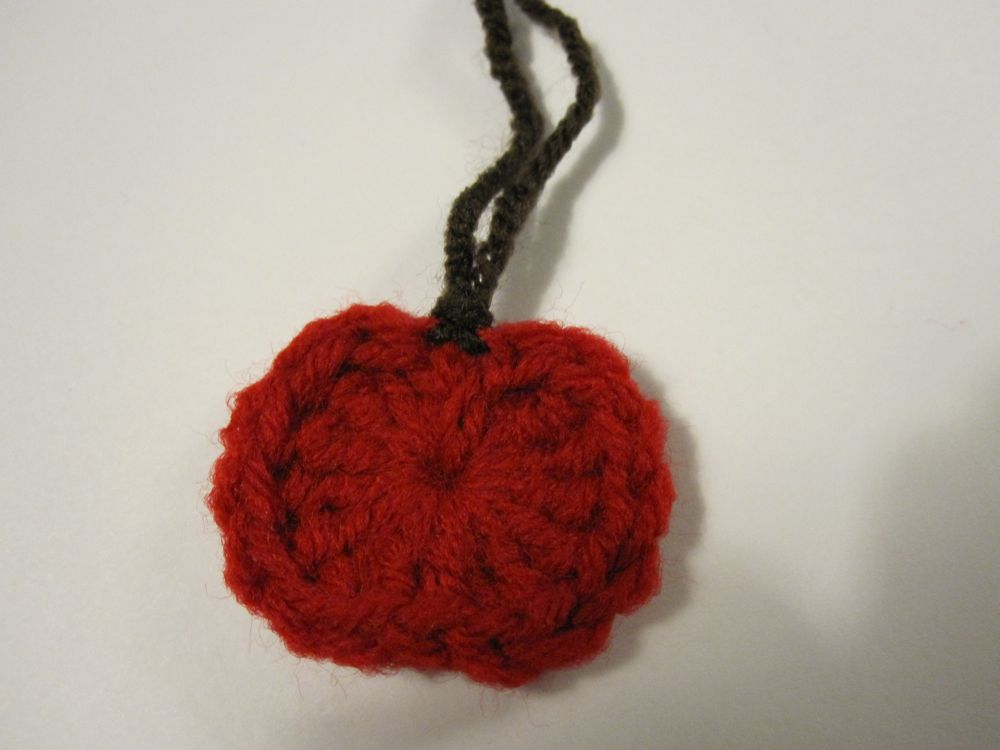
I am involved in the Upper Valley Sew-Op, a project of the Upper Valley Food Co-Op in White River Junction, VT. The logo of the Co-Op is a red apple with one leaf.

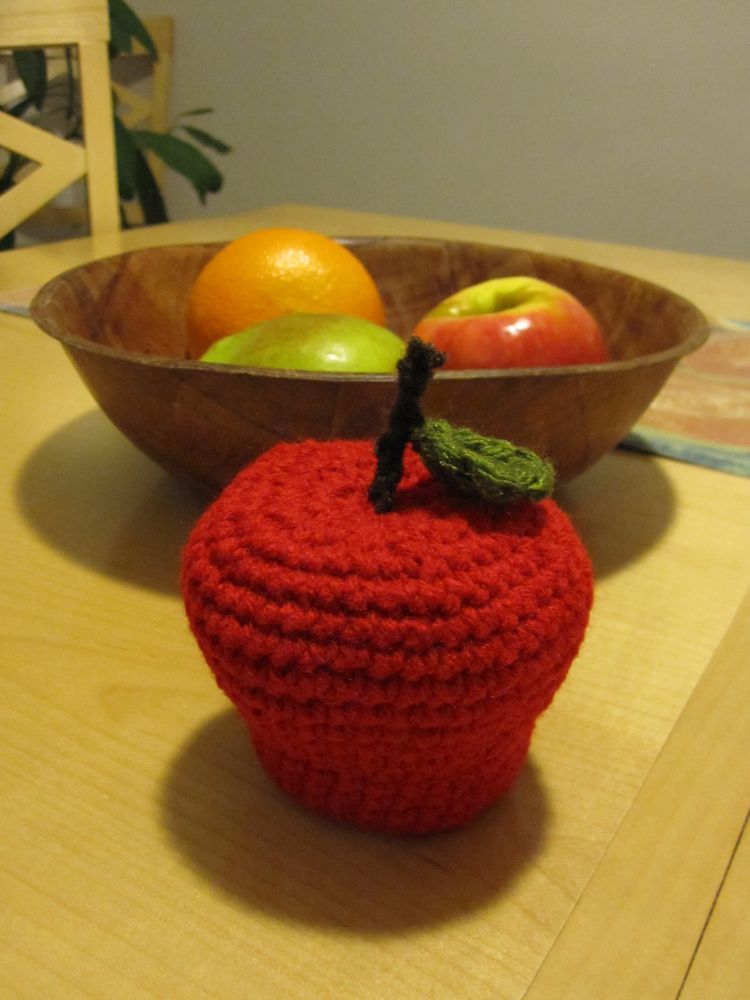
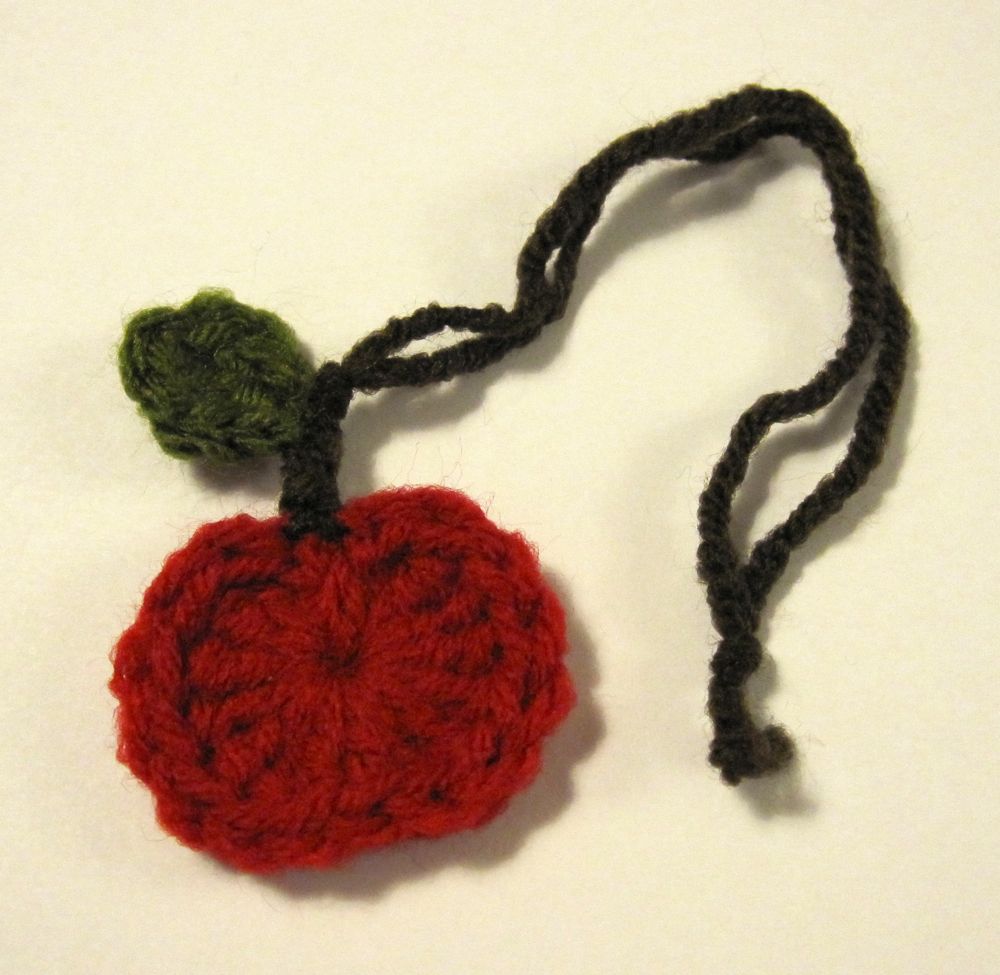
One night at the drop-in open hours, I started making one of the Lion Brand apple patterns (registration required to see the pattern). I got bored and started at the other end of my skein of red yarn to design a small flat apple pattern, finishing the large apple later. I had recently made a dozen or so of PlanetJune’s Love Hearts, the smallest of which is done as one round on a magic circle, shaping coming entirely from stitch height. I followed that model; the pattern is below. All pictures link to larger versions, and if any of them look odd it’s probably because I tweaked them to try to make the stitches clearer.
amigurumi apple paperweight crocheted small apple ornament

Small Apple Ornament
Abbreviations explained here.

Materials:
Small amounts of red, green, and brown worsted weight yarn
Size G/6 (4.0mm) hook
Yarn needle

Apple:

  • With red, make a magic circle, pull a yarn loop through, and ch 1.
  • Into circle: dc, 6 tr, 2 dc, 6 tr, dc.
  • Ch 1 and sl st into circle.
  • Pull circle tightly closed, sew yarn ends into apple to hide, and trim.

You may find that you need to scrunch the stitches together as you go along to make room for all of them, but hold on to both strands of the magic circle when you do so it doesn’t tighten up.

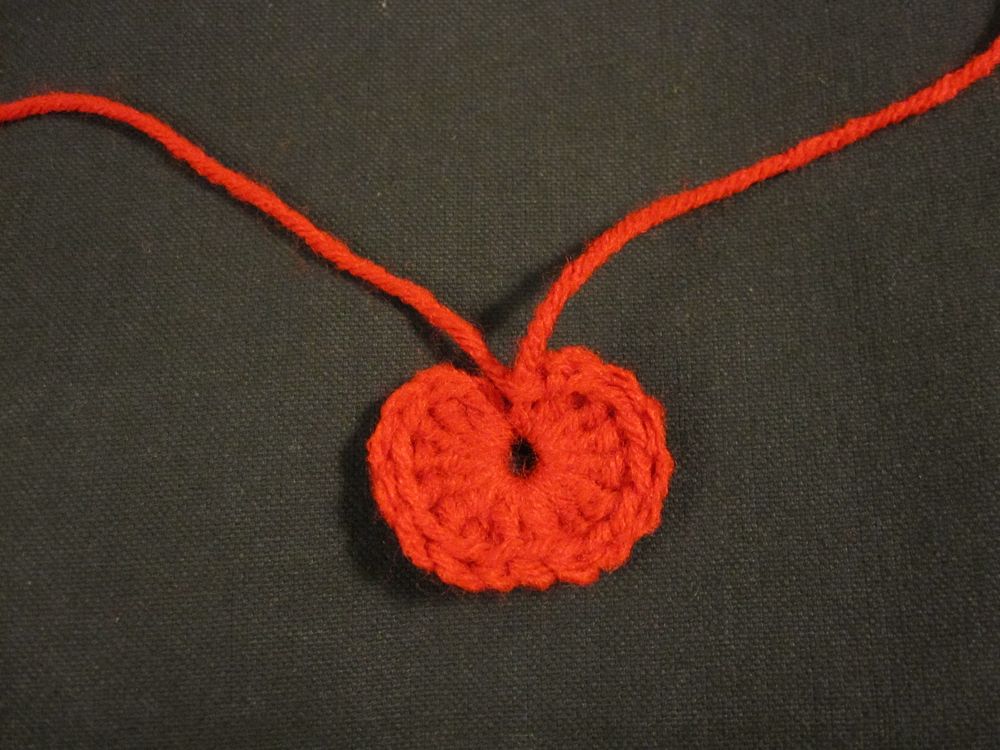
Pictures: apple halfway finished (one of the 2 dc done), complete and mostly tightened.
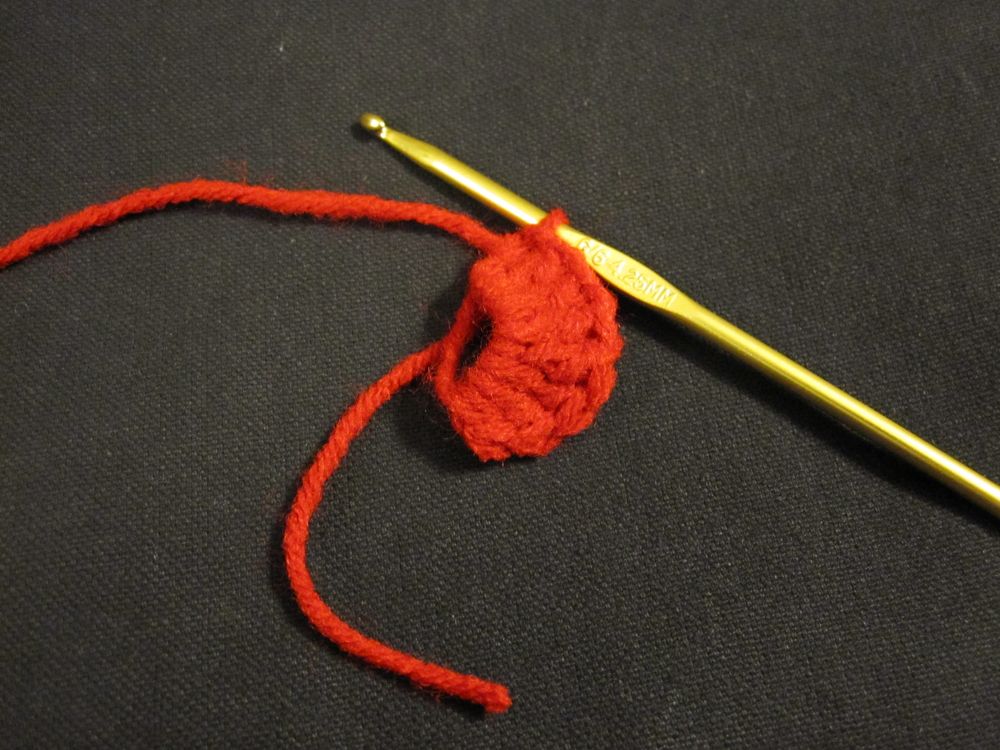
halfway finished crochet apple ornament finished crochet apple ornament

Leaf:

  • With green, make a slipknot, leaving about a 4″ tail.
  • Ch 4. Starting with second ch from hook, one st per ch, work sl st, sc, sl st.
  • Ch 1. Proceeding on the opposite side of the ch, sl st, sc, sl st again.
  • Sl st in first st to join; cut about a 3″ tail and pull through.
  • Sew slipknot end of yarn through leaf to emerge at about the same point as the other end of the yarn.

Picture: ready to make first slip stitch on second side of chain and final joining slip stitch. The larger loop is the second one (closer to the hook end) and the smaller is the final loop of the previous stitch.
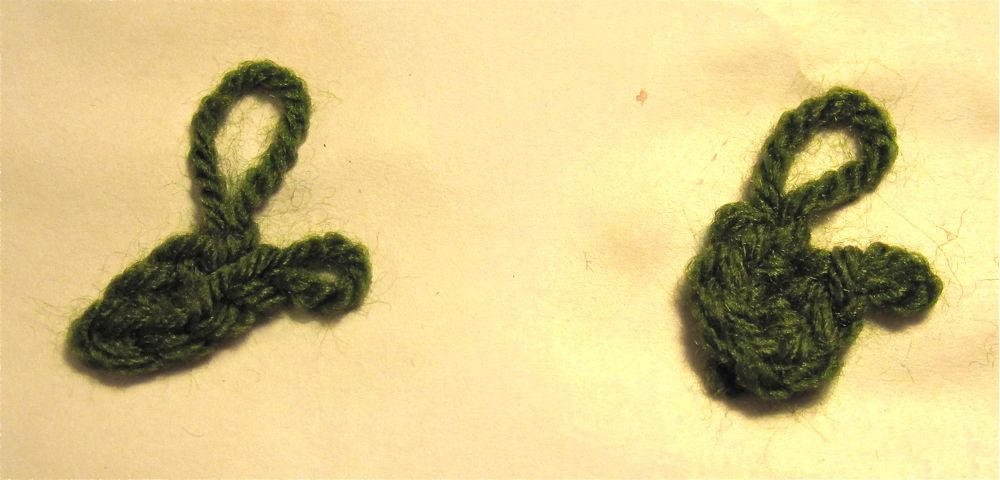
steps to crochet apple leaf

Stem and finishing:

  • For an ornament, cut about 15″ of brown yarn.
  • Feed each end through a red loop near the top center of the apple, front to back, keeping the two yarn ends even length. Bring the ends toward you over the brown loop and then feed them front to back through the loop. Pull snug. You may also make a lark’s head knot (properly it will be a reverse lark’s head), but it will not look as much like a proper apple stem, as you will see two split brown marks at the bottom.
  • Knot the brown yarns together about a half inch from the apple, and again a good ornament-hanging distance away from the first knot (I just use an overhand knot, treating the two strands as one).
  • Tie the leaf to the stem by feeding one of the leaf’s yarn ends between the brown yarn strands, between the apple and the first knot. Tie the leaf yarn ends together (I use a square or granny knot) and sew them back through the leaf to hide. Tug the ends of the leaf to make them pointier.
  • Trim the ends of the green yarn, and cut the brown yarn about a half inch above the second knot.

Pictures: What the lark’s head looks like, my attempt to show the knot I actually use, and that knot tightened down.
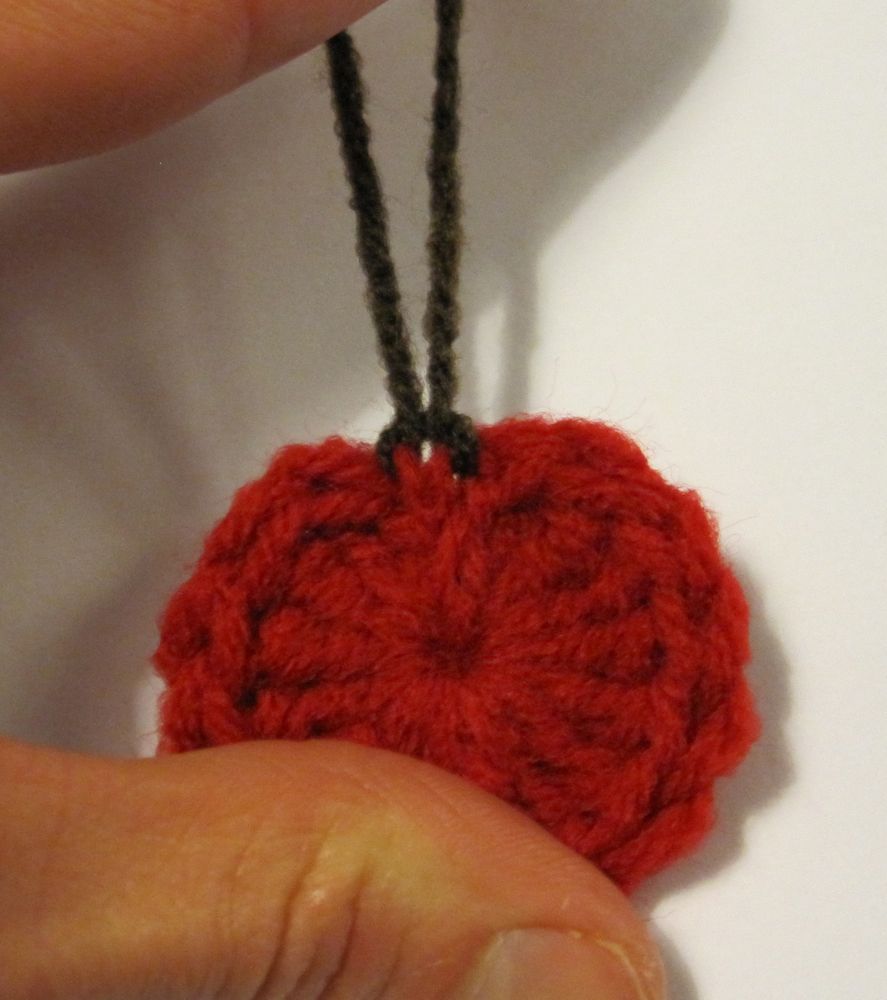
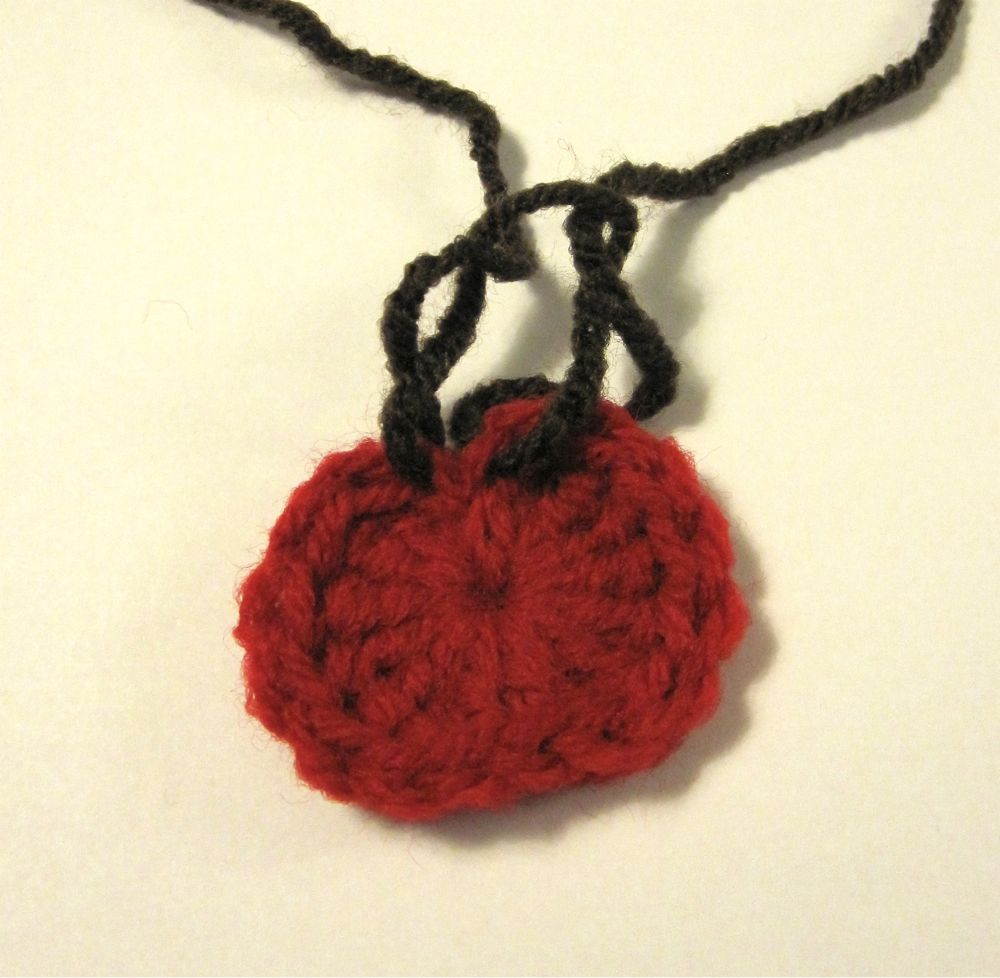
lark's head knot better knot for stem tightened knot for stem


Bonus Post: Iron Craft Challenge #17

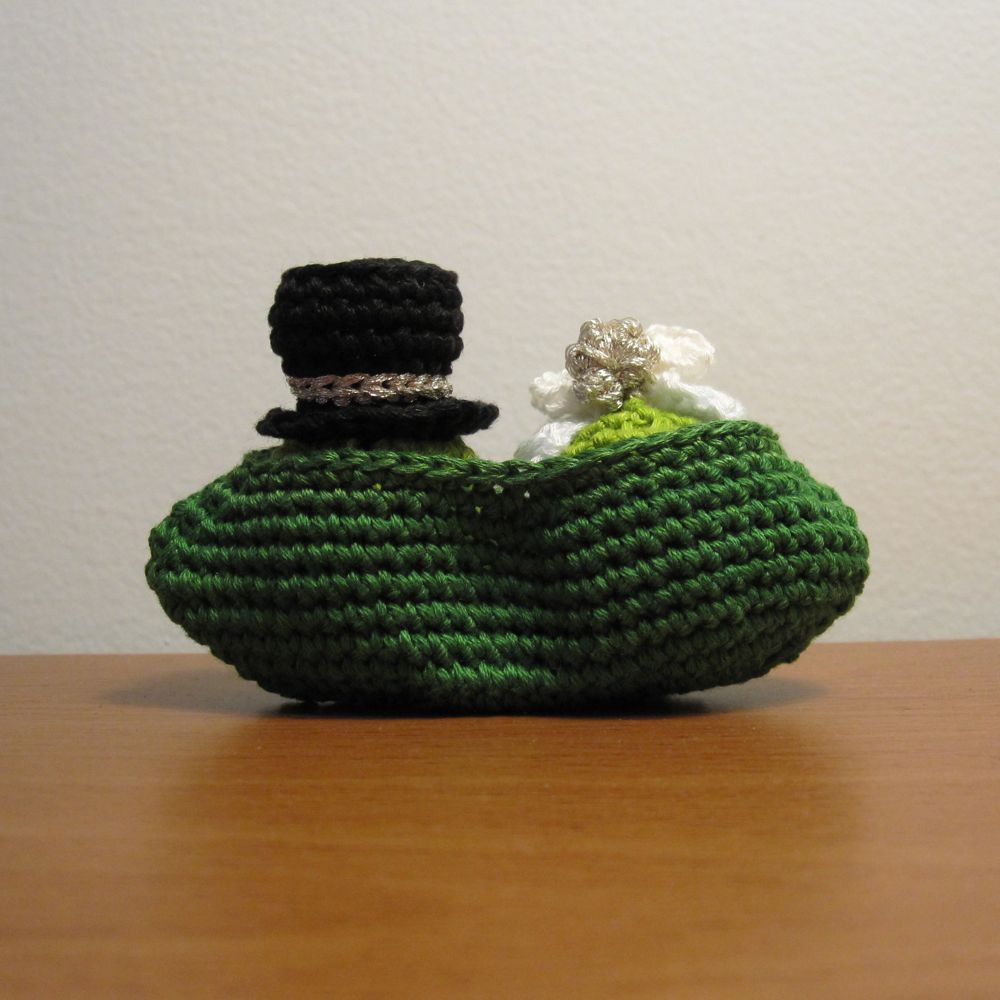
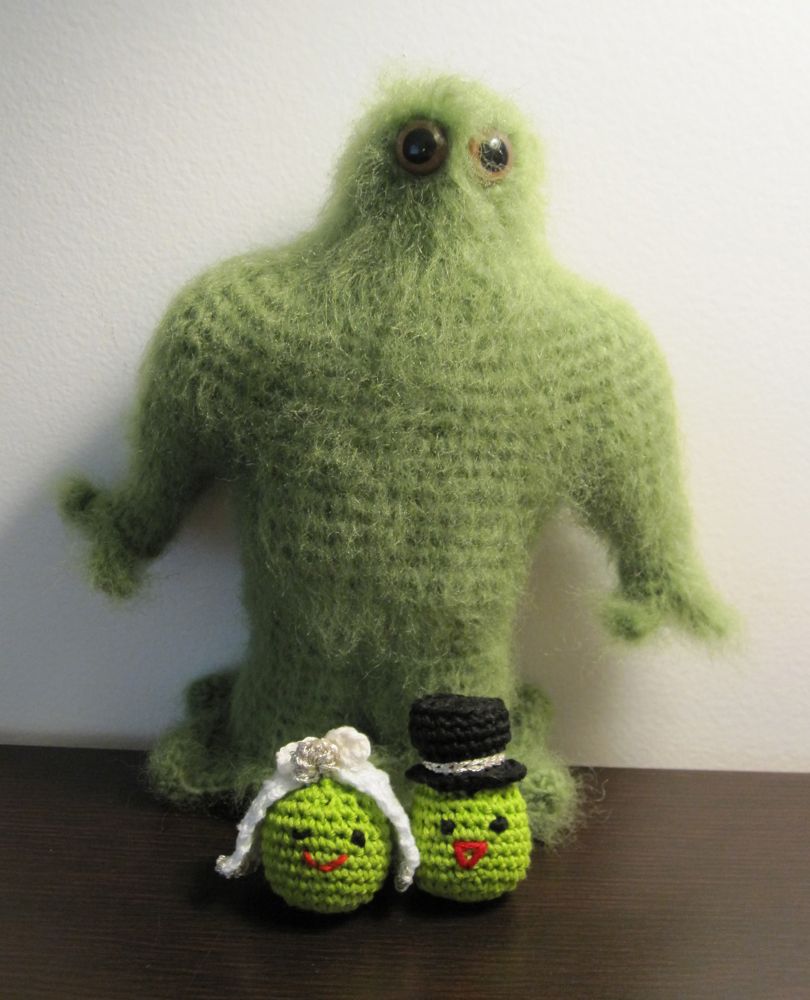
I wanted to make Lion’s “Two Peas in a Pod” amigurumi (registration required to see pattern) as soon as I saw it, but when does someone who’s not planning a wedding or bridal shower have a reason to make an explicitly wedding-themed project? Well, as it turns out, when Iron Craft takes the British royal wedding as its inspiration and sets weddings as the theme of the week. Until I remembered this pattern I wasn’t going to participate, since I have a number of wedding gifts to make but they are either already in progress or items I can’t complete in a week.

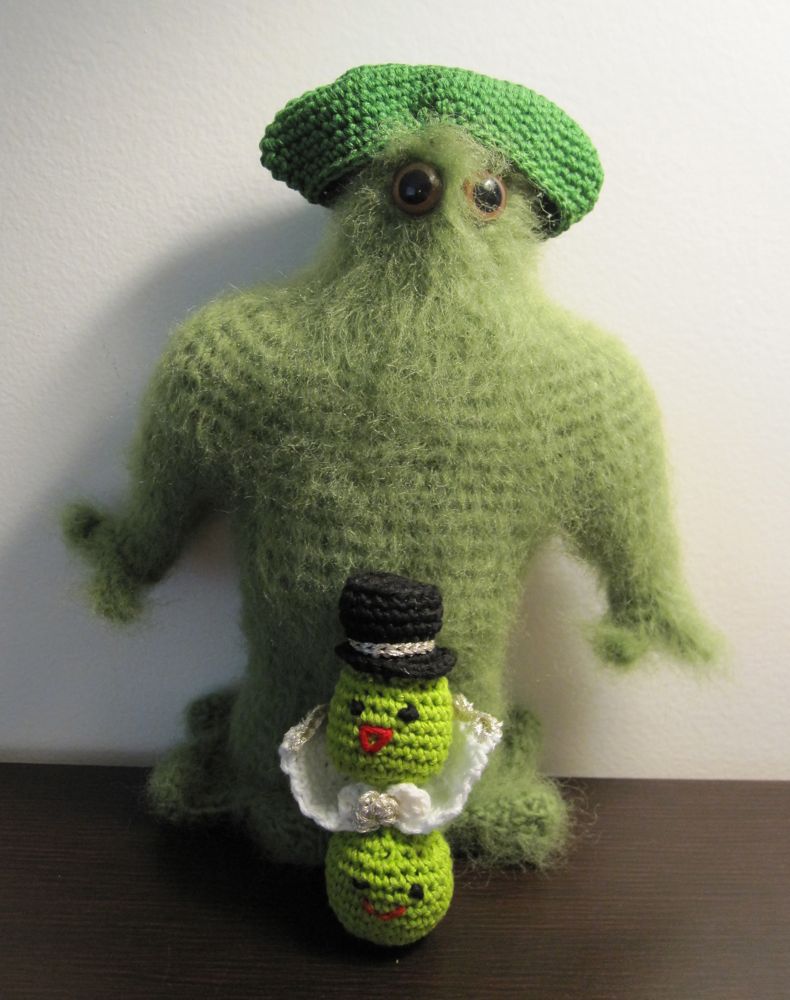
I added some silver to the mix, in the form of a hatband and trim on the bridal veil. Crocheting with metallic floss gets a big thumbs down – the strands would either prefer to have nothing to do with each other, or they catch on each other. However, I am very happy with how it came out! (except perhaps for Mr. Pea’s mouth.)

peas in a pod

peas taking vows
Stumpy got his one-day license for this.

posed picture
Smile for the camera!

silly picture
You always need a silly picture.

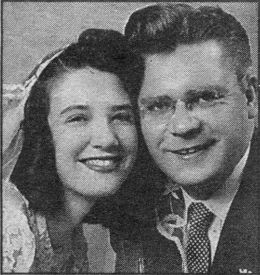
I made them grinning and winking because I wanted joy. Long ago I cut a 50th anniversary announcement out of the paper – they had used a wedding picture for the announcement, and happiness shines out of it.

wedding photo 1951

I cut it out as a reminder that unless I feel the way they look, I shouldn’t walk down the aisle. Also, they’re just darn cute.


Excellent ideas

Before I even began crocheting, I trolled Etsy for amigurumi patterns. My sister loves Peeps, so I was delighted to find Chiwaluv’s neon chickens pattern. Her chicks have exactly the right blobbiness to be Peeps.

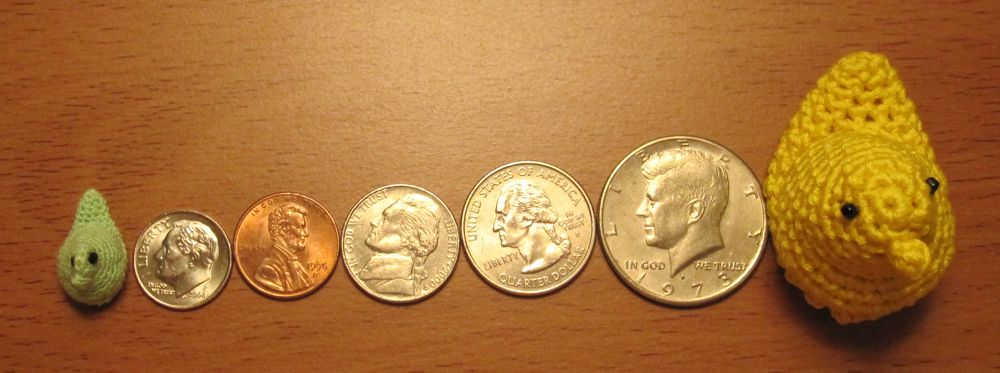
Kate’s current Peeps, all official plushies, are named Peep, Megapeep, Gigapeep, and Terapeep, and she mentioned she was hoping for a Picopeep. I thought I could make her at least a Micropeep out of embroidery floss. Then I realized crocheting sewing thread with a 10 hook (1.3 mm) would be terrific for a Picopeep. I have a couple dozen tiny spools of thread, bought for no good reason in a large bag at the dollar store, and their odd colors included a few plausible Peep hues.

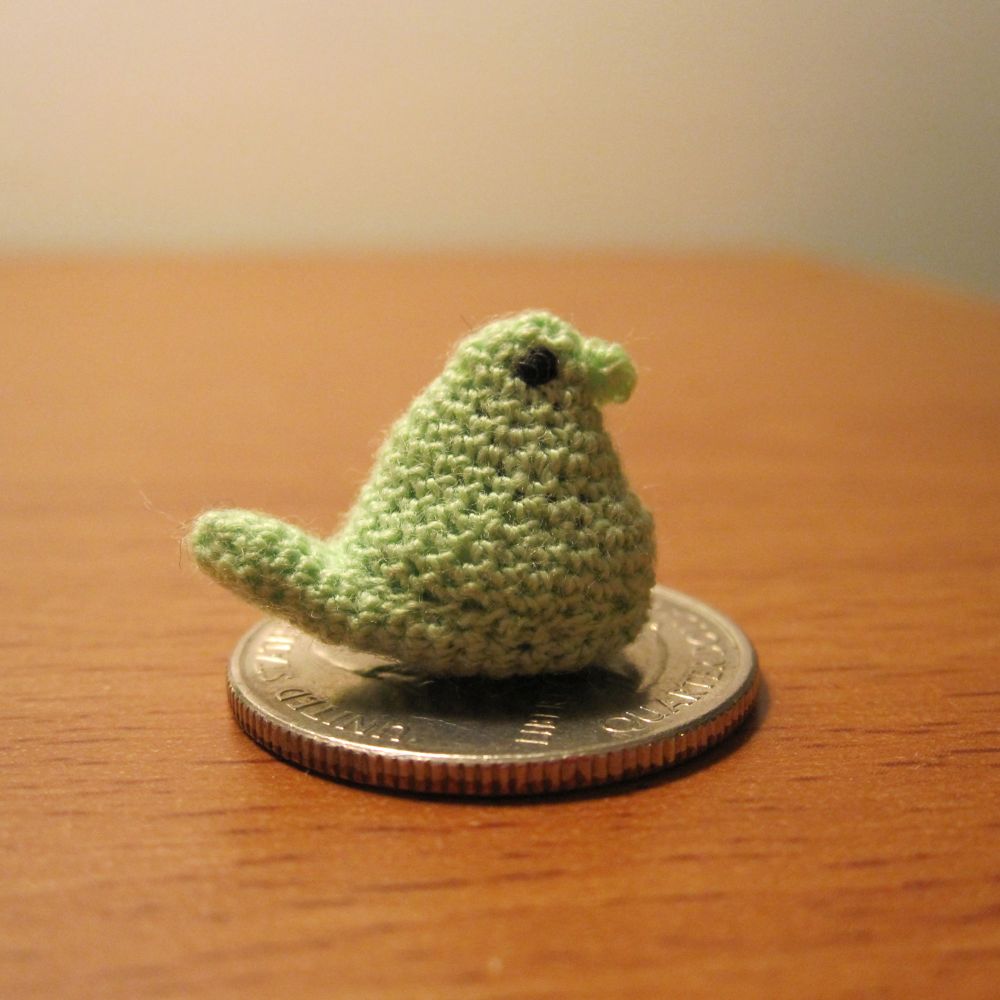
With my bionic vision and retractable tweezer fingers, I completed Picopeep in a mere five hours, a trivial 500% increase over the length of construction of Micropeep. Let’s see the results:

Picopeep on a quarter
Roses say “I love you.” Sewing-thread crochet peeps say “I love you more than eyesight.”

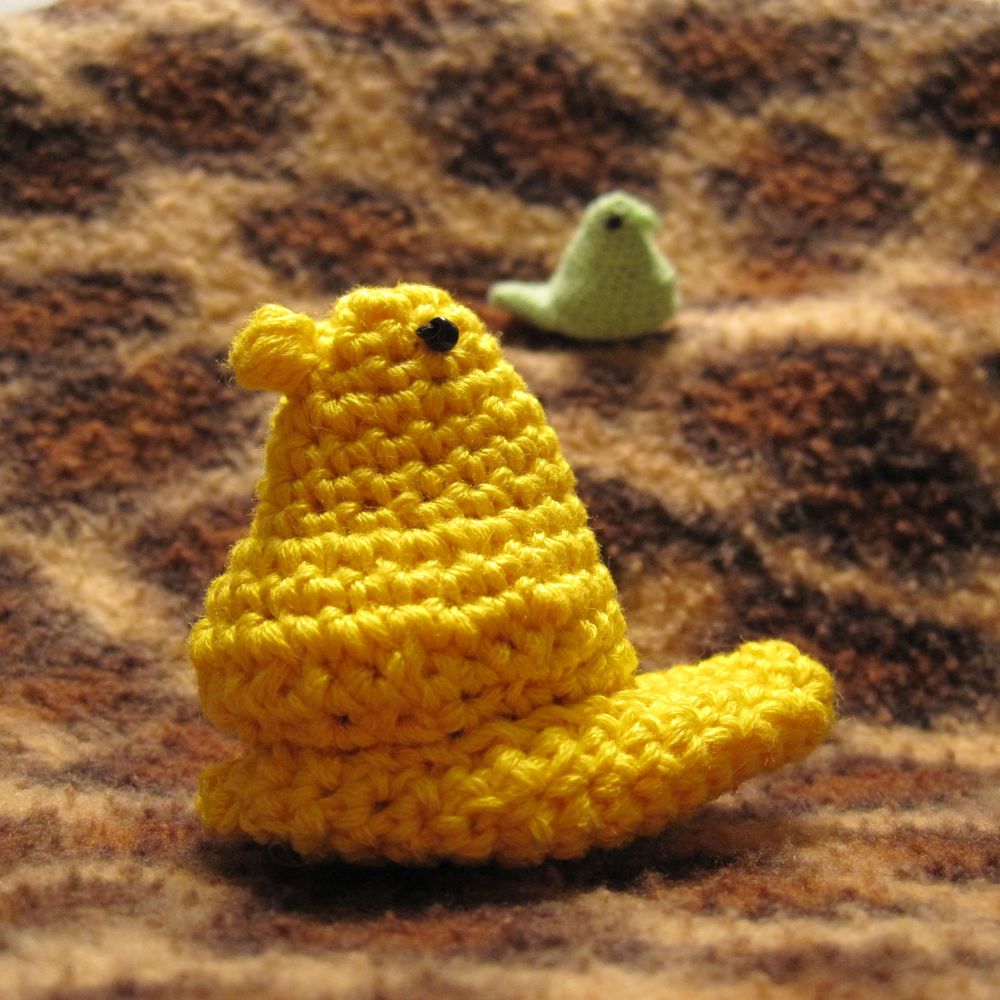
Peeps in rugged terrain
It is a little-known fact that Peeps’ native terrain is rugged, and in fact they are semi-arboreal.

In seriousness, one difficulty is that, like floss, thread is inelastic. This makes, in particular, the first stitch of the second round very tight. It is also difficult to see the stitches – strong light makes a world of difference! The thread twisted up as I went, though I might have been able to fix that by unrolling it from the spool in advance. I found I would make unintentional increases because the new stitch takes so little room on the previous round’s stitch that it was hard to tell last-used from first-unused. I am curious to know whether a larger hook would be easier; I think the hook I use for embroidery floss is proportionally larger.

Peeps and coins

To note: Peeps are a registered trademark of Just Born, Inc.


Embroidery ambitions

I love crazy quilts. Although patchwork quilts can be quite beautiful, I seem to lack the “precision” gene needed for equal angles and clean lines, and I suspect I would find it aggravating. However, crazy quilts are on the table.

Many of the lovely historical quilts have themes, such as fans or flowers. I once entertained the notion of a quilt about my history: schools, hobbies, places I’ve lived. That idea never got off the ground, however, and the project that did is the Children’s Book Quilt.

I have a couple of shelves’ worth of children’s books despite having no children, and a few favorite illustrators – Shel Silverstein, Maurice Sendak, Tove Jansson. The children’s book quilt will have embroidered versions of illustrations from specific books, as well as applique images and motifs, and possibly even some painted images (for Leo Lionni’s books, in particular). I will give a complete rundown of the ideas I have next time I finish an embroidery piece, but for now I want to share the two I’ve done so far and talk about the process.

I use tracing paper to copy the images out of the book with a pencil, darken the main lines, and then trace them again onto wash-away embroidery stabilizing paper. Then I cut them out and pin them to fabric, stitching on the lines. I use my beloved DMC color card (I am so glad I got one before they switched from actual floss samples to photos – the sheen is different; I can’t imagine it’s as accurate) to pick floss colors if appropriate. All the embroidery is just freehand straight stitch or backstitch; when I finally put the individual pieces together I’ll use fancier stitches for edges.

The more recent is Shel Silverstein’s bearded man, from Where the Sidewalk Ends:

Shel Silverstein's bearded man in embroidery

I realized after the fact that I fig-leafed him a bit, covering his bare behind with beard, but I am still thrilled at how well he came out – especially his feet. In the tightly-stitched areas, however, the wash-away paper is not living up to his name. It withstood rinsing in water, soaking in white vinegar, rinsing in water again, and two trips through the washing machine pinned flat in a mesh bag. Ideas are welcome.

Less recent is the Dodecahedron from Norton Juster’s The Phantom Tollbooth, illustrated by Jules Feiffer.

Phantom Tollbooth's dodecahedron in embroidery

His stitching is not as good as the bearded man (possibly I used too many strands; I can’t remember), but it will do. He had the same problem with the wash-away paper, especially in his eyes. However, the fabric, though it’s hard to tell, is white with pastel circles stitched into it, so I just re-stitched the pupils that were hidden by paper. I only noticed as I was re-stitching the eyes that his right arm is perfectly aligned with the underlying circle.

I’ve been trying to stick to books I actually had as a child. I have We Were Tired of Living In a House (the beautiful illustrations by Doris Burn, not the lame and generic new ones) in progress and something from Finn Family Moomintroll (Tove Jansson) set up but unstitched. I am dissatisfied with the fabric for the latter, though, and would probably prefer a different image, so I may break my rule and use an image from a more recently-acquired Moomin book. My first multicolor embroidery will probably be Bananas Gorilla from the Richard Scarry books, because he’s the raddest. I am a slow embroiderer, but hope to complete this quilt before I am of retirement age!

Note: the copyrights to the illustrations in Where the Sidewalk Ends and The Phantom Tollbooth are held by Evil Eye Music, Inc., and Jules Feiffer, respectively.


Bonus Post: Iron Craft Challenge #16

ribbon purse front view

My sister and brother-in-law went to Japan last year, and one of the many gifts they sent me afterward (solar-powered dancing sumo wrestler!) was a five-yen coin. It added to my collection of coins from New Zealand, Canada, Iceland, and various Euro-using countries.

Through Dollar Store Crafts I learned of the existence of Iron Craft, a weekly crafting challenge. I’m minimizing my craft expenditures, at least through April[1], and so I passed on the Peep-crafting challenge, but the following week was money-related crafts. Perfect! I have wanted to try making a ribbon purse for a while now, and had the perfect ribbon to go with the yen.

ribbons and yen

I’ve structured the rest as a tutorial. You’ll need a wider ribbon, a narrower ribbon, and some coordinating lining fabric. My wider ribbon was about twice as wide as the narrower ribbon (7/8″ vs 3/8″), so if yours isn’t your bag will have different proportions. I don’t recommend my sheer wide ribbon, as it did not want to stay squared, which made it hard to work with. The amount needed will vary, of course, but mine used less than 2.5 yards of the wider ribbon and 2 yards of the narrower ribbon.

Let W be the width of the wider ribbon and N be the width of the narrower ribbon. Cut 5 lengths of the wider ribbon: two of length 3W + 10N + 1.5 inches (“shorter”), and three of length 2W + 15N + 1 (“longer”). Cut 9 lengths of the narrower ribbon: five of length 10W + 1.5 inches, and four of length 3W + 1. [If you are working in metric, 1 can be 3cm and 1.5 can be 4cm. It is not important to be exact.]

For me, the height of the bag is 5N. Take one shorter and one longer wide ribbon and pin them at 90 degrees, the shorter ribbon centered on the longer one with one edge 5N + 1/2″ away from the end of the longer ribbon (or a bit further). Weave the remaining wide ribbons in a grid, pin, and stitch in place (I stitched along both edges of each of the two shorter ribbons).

initial weaving weaving the second side

Weave the narrower ribbons through the longer loose ends of the three wide ribbons. Put the longer narrow ribbons closer to the middle, and line all of them up so there is 1/2″ overhang on one side. Stitch along the outside edges of the wide ribbons.

Continue to weave the narrow ribbons through the wider ones. Work with the bag inside-out – that will make the final corner easier. You shouldn’t need to sew more than the far edge of each side (so, no maneuvering the sewing machine in the inner corner).

Of course, if you’re me, and you cut your narrow ribbon to be 8W instead of 10W, you might utter some unladylike words and have to cut new lengths of ribbon to cover the fourth side of the bag. I cut them much longer than necessary so I could line up the ribbon pattern in the corner.

fixing my oversight box-shaped

When you get to the last corner, pin the narrow ribbons right sides together and stitch, just far enough out from the corner to avoid catching the wider ribbon. Trim to 1/2″ and press open.

Now you need to cut out lining pieces. Follow my directions for the flap; if you prefer for the rest futuregirl has a tutorial complete with worksheet. The flap piece should be (flap height + 1)” by (flap width + 1)”. The other piece is (2*(bag height) + bag depth + 1)” by (bag width + bag depth + 1)”, where “depth” is the front-to-back measurement. [Here, precision is more important, so in metric, replace 1" by twice your desired seam allowance, and in the following, replace 1/2" with your seam allowance.]

lining pieces

Center the flap lining on the right side of the flap and stitch around the outside, catching only one of the two kinds of ribbon in your stitching but otherwise stitching as close as possible to the weave. You may need to scrunch the ribbons down on the middle wide ribbon, since they are not sewn in place. If you want fancier corners, as I did with my angled cut-off, I found it easier to stitch squarely with the ribbon side up, and then turn it over to stitch the angles. That way you know you are not stitching too close in, but you don’t have the visual distraction of all the ribbons.

Trim the seam allowance and turn. My ribbons didn’t take well to ironing, so I topstitched close to the flap edge to keep the lining from puffing out.

lining pinned to flap sewn and trimmed

Fold the larger piece of lining material so that the bag width is preserved (fold the 2height+depth direction in half; you are making a seam that will run up the center of each side of the bag). Stitch the two edges perpendicular to the fold, with a 1/2″ seam allowance. Press the fold into a crease. Cut along the fold line outside each stitch line.

Open the seam allowance and fold the side down so the seam line runs along the bottom crease. Mark a line (bag height + 1/2)” down from the top edge, perpendicular to the seam line. Pin and stitch along that line. Do the same on the opposite side, cut the corners off at about 1/2″ from the stitching, and press them up toward the side seam. (If your wide ribbon is not sheer, pressing down toward the bottom of the lining is also fine.)

one edge folded down corner marked

Fold the top edge of the lining down 1/2″ all around, with the raw edge and seam allowances to the outside, and set the lining into the ribbon bag. Line the lining seams up with the center sides of the ribbon bag, pin, and topstitch all around the bag. Again, you may need to make sure the narrow ribbon hasn’t arced up on the middle wide ribbon in front.

You may want to turn the bag inside-out and stitch from the ribbon side, to make sure that on the back of the bag your stitches line up with the ribbons.

pinned and ready

To make the bag fold in at the top and improve its shape, turn it inside-out, pinch the sides in half vertically, and stitch close to the fold line for 3/8″ to 1/2″. Turn the bag right-side-out again, pinch the four corners (try to catch the lining in the pinch all the way down) and stitch vertically close to the fold top to bottom.

stitched to pinch inwards corner stitching

Finally, sew your coin (or button, or beads) centered at the edge of the flap. A snap or magnetic closure could be added underneath, or a button could be sewn on the front of the bag and a loop sewn onto the flap. I did none of that, so my bag does fasten shut. But my remaining international coinage has a prettier place to live now!

front-profile view back-profile view

[1] edit: apparently Dollar Store Crafts took down their “April is Stash-Busting Month!” page after April. The idea is to buy nothing new for the month; craft only out of your existing materials.


Webcomic coasters

My brother-in-law writes the webcomic Binary Souls / Other Dimensions, starring the hapless robot Hondo. I wanted to give him a personalized Christmas gift – one that he would literally not be able to get elsewhere – so I made him Hondo coasters. A tutorial on making fabric coasters will follow in a later post.

For these coasters, I found appropriate images in the comic, and used thin white fabric like tracing paper to draw the images with fabric markers and (when necessary) paint pens. I let them dry for 24 hours and heat set them. I had to flatline (a.k.a. underline) with a second layer of the white fabric to avoid showing through (though there was still a little bit of that), and I backed them with black fabric.

They came out better than I expected. Here are the originals with the tracings:

blue and white Hondo

green Hondo

pink and red Hondo

I had a little trouble fitting the pink/red one on the coaster because I was too close to the edge of the fabric, but it worked out:

BS/OD finished coasters


Bib tutorial

I’ve recently started making terrycloth bibs for friends having babies. They have gotten good reviews, and are very easy, so I thought I’d post a tutorial for them.

terrycloth bibs

Materials: towels or terrycloth remnants, fabric pens, commercial bib pattern (or well-fitting bib, used as pattern), coordinating cotton calicos, 3 big snaps per 2 bibs.

Cut out the pattern piece. For a bib like the red one, use the pattern as a guide to arrange strips of calico on the towel; use a short, wide zigzag to edgestitch them down. After that, pin the pattern to the towel and cut it out; zigzag the edge to keep it from fraying (you’ll probably need to go around twice). For a bib like the green one, cut out the bib and zigzag the edge. Make a template for the blocks and cut them from calico; use fabric pens to draw letters on the blocks. Let them dry flat for 24 hours and iron to heat-set the ink. Use a wide, short zigzag to edgestitch them to the bib and then a narrower zigzag to “draw” the edges of the block (work from inside to edge to prevent bubbling). To finish both bibs, split the snaps into 2 piles, each 1 of one half and 2 of the other. Sew the 2 matching halves to one strap end and the mismatch to the other. This allows it to be adjustable, which may or may not really be necessary but seems like a good idea. Make sure the ends lap over each other! I put the two matched halves facing out and the other facing in, so the unused half won’t be cold on baby’s neck. You could also use velcro, in which case make any unused scratchy side face out.

A few technical notes: I have found that tension matters a lot more than I’m used to – I use the bib fabric color in my bobbin, and the applique fabric color on top, so if the bobbin thread pulls through at all it is very noticeable. My tension runs from 0 to 9 and is usually set about 4; for these, even a 2 causes pull-through. 1-1.5 is the appropriate setting. I also decrease the pressure of the presser foot to avoid puckering of the top fabric as the foot smooshes it along in front.


Manta ray finger puppet

manta ray finger puppet close up
Hi there!

An early crochet effort of mine was trimming Roman Sock’s manta ray pattern down into a finger puppet, because I lack the attention span to do the full project. I have six rows of the full-size version, waiting.

For those of you who wish to follow suit, I believe I used an F-hook, though gauge isn’t important, and acrylic worsted-weight yarn from Jo-Ann’s – nothing fancy.

Working from the original pattern (crochet abbreviations):
gray side has 2 rows of 3 sc for head, and 6 rows with sc inc on each end for wings.
base of tail is 3 sc wide, has a second row of 3 sc and then decreases by omitting turning ch; when you get to 1 sc, ch 7.
sl st from there down the tail and to the tip of the wing, and then from the base of the tail on the opposite side (omitting the ch-7 part) to the opposite wing.

In cream I left out the tail.

manta ray finger puppet pieces

After embroidering the eyes with black embroidery floss, I used pink embroidery floss to whipstitch the two halves together on the inside of the mouth, then wound the floss horizontally around those stitches (in place of Brie’s pink felt, which would never fit in a finger puppet). Then I slip stitched between the side of the mouth and the base of the tail on each side to finish connecting the halves.

manta puppet

manta puppet


Hairy Green Monster

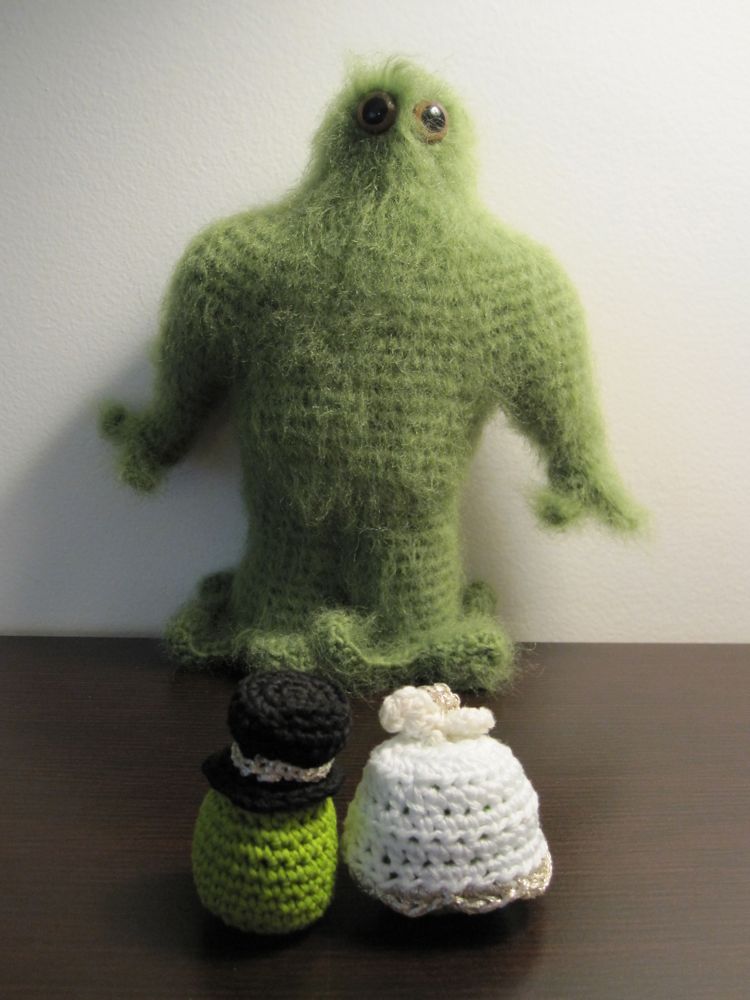
I am a member of the Amigurumi Army on Ravelry, and every month brings an amigurumi mission. February’s mission was dragons and serpents, and my effort is at the top of the picture of my embroidery floss animals. March’s mission was “green means go!”: create something, anything, green. I decided to create a green monster, using the brush crochet technique. I had recently acquired a dog slicker brush and read it works best on mohair and wool, so I got some Red Heart Stitch Nation Full o’ Sheep in “thyme”, picked out my E hook, thought about overall shape, and started stitching!

Stumpy the crocheted green monster

He turned out more complicated than I expected, so a pattern pdf will follow later, once I have time to put it together. Handwritten, the pattern is three and a half pages long! Not because it’s overly difficult; at least some of the length is due to separate left and right arm patterns, so they will be mirror images.

Rock Star Monster
Rock star


Embroidery floss crochet

I began crocheting in November of 2010, during a bout of insomnia, and made piles of hearts and goldfish. However, reading about crochet done with plarn (“yarn” made from plastic bags), old cassette and video tape, and strips of t-shirts made me think yarn was boring. Ribbon was promising, but I had no projects I wanted to make with it. Futuregirl wrote about crocheting with ordinary sewing thread, and I began roaming around my sewing room. Ultimately, I picked up my box of off-brand embroidery floss and the largest of my steel hooks (1/2.75mm).

I began ambitiously with Roman Sock’s pocket elephant. Legs of three obviously different diameters and Neanderthal brow ridges caused by upside-down safety eye backings give him character. Since then I have rarely been without an embroidery floss work in progress. Recently I got all my little guys together for a family photo. Click for a larger version; patterns linked below.

embroidery floss amigurumi

Top to bottom, left to right:
mighty & ferocious dragon, penguin ornament (feet freehanded by me), tiny whale, pocket elephant, Lion Brand fortune cookie (pink; registration required), Alicia Kachmar fortune cookie (beige), fishhead (freehanded by me), mini turtle, Falwyn’s little fox.

I had to increase the size of the turtle body to match the shell, though I had no such mismatch in yarn. Contradictorily, my fox is a fat little sausage. Stitch proportion tests will be made and reported on.